


Electronic Referral Management Systems: The Evolution from Fax Machines to AI-Powered Coordination
The term 'electronic referral management system' has been around for over two decades, but what it means has changed dramatically.

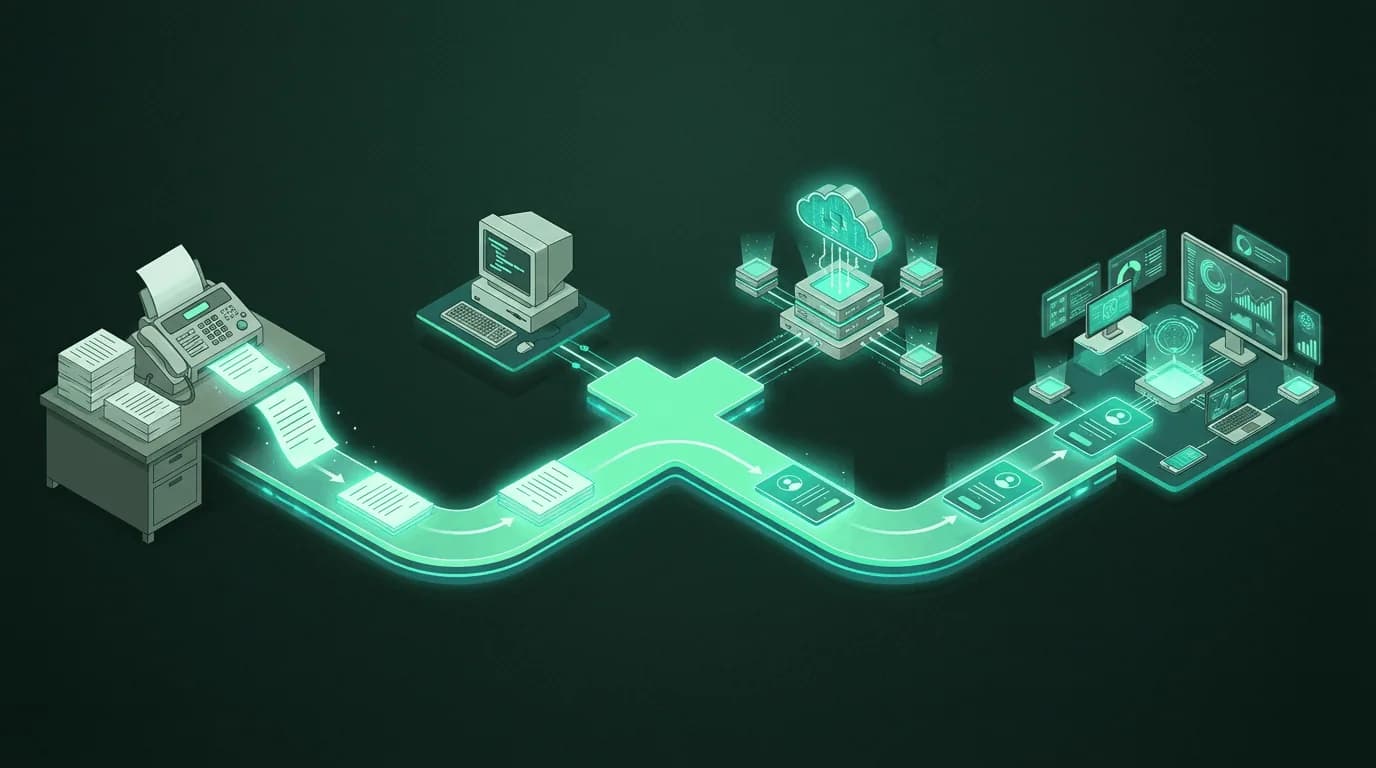
The term “electronic referral management system” has been around for over two decades, but what it means has changed dramatically—and most healthcare organizations haven’t kept up with the evolution. A system that was considered “electronic” in 2005 because it replaced a paper log with a spreadsheet is fundamentally different from a system that uses AI to automate the entire referral lifecycle from order creation through completed specialist appointment.
Having operated healthcare organizations that processed thousands of referrals monthly across multiple technology environments, I’ve lived through every stage of this evolution. At Linear Health, we build what I’d call the current frontier—AI-native referral automation that integrates directly with EHRs to eliminate manual coordination work. But understanding where the technology has been helps explain why most practices still operate with workflows that are “electronic” in name only and manual in practice.
This guide traces the evolution of electronic referral management, explains the current technology landscape and interoperability standards that shape it, and outlines what a modern electronic referral system should actually deliver.
The Evolution: Four Generations of Electronic Referral Management
Generation 1: Digital Tracking (2000s)
The first electronic referral management systems were essentially digital versions of paper logs. Practices entered referral information into a database—sometimes their EHR, sometimes a standalone Access database or spreadsheet—and used it to track which referrals had been sent, which patients had been contacted, and which appointments had been scheduled. The coordination work remained entirely manual. Coordinators still made phone calls, faxed documents, and manually updated records. The “electronic” part was the tracking, not the doing.
Many practices still operate at this level. They’ve adopted EHRs and have digital referral records, but the actual coordination workflow—contacting patients, submitting prior authorizations, communicating with specialists, following up on no-responses—happens through phone calls, fax machines, and portal logins, just as it did before the EHR.
Generation 2: Electronic Referral Exchange (2010s)
The second generation introduced electronic transmission of referral information between providers. Rather than faxing a referral letter, the referring practice could send referral data electronically to the receiving specialist practice. Standards like HL7 and early implementations of Direct Secure Messaging enabled some automated exchange of referral orders, clinical notes, and consultation reports between participating systems.
The AHRQ evaluated electronic referral systems during this period and found that seven of eight specialty clinics using e-referrals saw substantial decreases in wait times—evidence that electronic transmission alone, even without workflow automation, improves the referral process by reducing information delays and communication gaps.
The limitation of this generation was that electronic exchange addressed the information transfer problem but not the coordination problem. Referral data moved faster between systems, but someone still needed to contact the patient, verify insurance, submit authorizations, and follow up when patients didn’t schedule.
Generation 3: EHR-Integrated Coordination (2015–2022)
The third generation embedded referral management workflows into EHR platforms and purpose-built coordination tools that integrated with EHRs. Epic’s referral modules, Athena’s referral management capabilities, and early referral coordination platforms provided structured workflows within or connected to the EHR environment: referral order creation triggered coordinator worklists, status tracking provided visibility across the referral lifecycle, and some patient communication capabilities (portal messages, basic SMS) supplemented phone-based outreach.
This generation meaningfully improved referral management for organizations that implemented the tools fully. But “fully” is the key word. Many practices adopted the EHR’s referral module without redesigning their coordination workflows to take advantage of it, resulting in a digital tracking system overlaid on manual processes.
Generation 4: AI-Automated Referral Management (2023–present)
The current generation uses artificial intelligence and automation to perform the coordination work itself, not just track it. AI-native referral management systems:
- Detect new referral orders in the EHR automatically
- Parse incoming referral faxes using natural language processing to extract patient demographics and clinical information
- Contact patients within minutes through SMS, email, and voice AI
- Submit prior authorizations to payer portals automatically
- Match patients with appropriate specialists based on insurance and availability
- Enable self-scheduling through mobile-friendly interfaces
- Send intelligent reminder sequences to reduce no-shows
- Close the loop with referring providers when appointments are completed
The fundamental shift is from electronic tracking (humans do the work, the system records it) to automated execution (the system does the routine work, humans handle exceptions). Up to 80% of coordination work automated. Your team stays in the loop on the other 20%.
Interoperability Standards: The Plumbing Behind Electronic Referral Exchange
Understanding the technical standards that enable electronic referral management helps explain both what’s currently possible and what’s coming.
HL7 (Health Level Seven) is the foundational messaging standard for healthcare data exchange. HL7 v2 messages have been the backbone of EHR-to-EHR communication for decades, supporting order transmission, results reporting, and patient demographic updates. Most electronic referral systems that exchange data between EHRs use HL7 v2 messaging for at least some of their data transfer.
FHIR (Fast Healthcare Interoperability Resources) is the modern standard that’s gradually replacing HL7 v2 for many use cases. FHIR uses RESTful APIs—the same architectural approach that powers web and mobile applications—to enable data exchange between healthcare systems. FHIR is more developer-friendly, supports more granular data access, and is the standard mandated by recent CMS interoperability rules.
The CMS Interoperability and Prior Authorization Final Rule requires Medicaid MCOs, CHIP managed care entities, and Medicare Advantage plans to implement FHIR-based APIs for prior authorization by 2027. This means electronic referral management systems will eventually be able to submit and track prior authorizations through standardized FHIR APIs rather than logging into individual payer portals. The rule also requires plans to include a specific reason for prior authorization denials and report authorization metrics publicly.
Direct Secure Messaging is a standard for encrypted, point-to-point healthcare communication that functions like a secure email system for clinical data. Some referral coordination workflows use Direct messaging to exchange referral documents and consultation notes between providers who don’t share an EHR system.
For practices evaluating electronic referral management systems today, the practical implication of these standards is this: choose a platform that integrates with your EHR through established APIs (not batch file uploads or manual data entry) and that’s positioned to take advantage of FHIR-based prior authorization APIs as they become available. A platform built on modern integration architecture will become more valuable as interoperability mandates take effect, while one built on legacy integration methods will require significant re-engineering.
What a Modern Electronic Referral Management System Should Deliver
Based on the current state of technology and the trajectory of interoperability standards, a modern electronic referral management system should provide these capabilities as standard, not as optional add-ons or future roadmap items.
Automated referral detection and intake. The system should detect new referral orders in your EHR automatically and process incoming referral faxes using NLP to extract patient and clinical data without manual data entry. If coordinators are still manually entering referral information into the platform, the system is a generation behind.
Multi-channel patient outreach and self-scheduling. Patient contact should happen within minutes of referral creation through the patient’s preferred channel—SMS, email, or voice AI—with the ability for patients to self-schedule from their mobile device. The system should escalate through channels when patients don’t respond, following evidence-based outreach sequences rather than relying on a single contact attempt.
Prior authorization automation. For practices managing prior authorizations, the system should auto-detect when authorization is required based on the patient’s plan and the referral type, prepare and submit authorization requests to payer portals, monitor approval status, and alert coordinators to denials. As FHIR-based authorization APIs become available, the system should adopt them—reducing the portal-by-portal submission approach to a standardized electronic process.
Closed-loop tracking to completion. A referral isn’t complete when the patient schedules. It’s complete when the patient is seen by the specialist and the consultation notes are back in the referring provider’s chart. The system should track every referral through to actual completion and automatically notify referring providers of outcomes.
Actionable analytics. Reporting should answer operational questions: Which referrals are stalling? Which patients are at risk? Which payers are causing the most delays? Which specialist partners are performing best? Reports that only show aggregate volumes without enabling specific interventions aren’t useful for daily operations.
EHR integration that eliminates double-entry. Every piece of referral data should flow between the referral management system and the EHR automatically: patient demographics, referral orders, insurance information, authorization status, appointment data, and completion status. If coordinators are copying data between systems, the integration is insufficient.
The Gap Between “Electronic” and “Automated”
The most important thing to understand about the electronic referral management landscape is that having electronic records of referrals is not the same as having automated referral coordination. A practice that tracks referrals in their EHR but still has coordinators making phone calls, faxing documents, and manually submitting prior authorizations has an electronic tracking system with a manual coordination process.
The gap between electronic tracking and automated coordination is where most of the operational cost and referral failure lives. Closing that gap—through AI-powered automation that handles the routine coordination work while preserving human attention for complex cases—is what distinguishes current-generation electronic referral management from everything that came before.
At Linear Health, our platform bridges this gap for practices on athenahealth, eClinicalWorks, NextGen, and Greenway Health. We process referrals from detection to completion with automated outreach, authorization, scheduling, and tracking—delivering the “electronic” referral management that the term has always promised but that most implementations haven’t actually achieved.
Frequently Asked Questions About Electronic Referral Management Systems
What is an electronic referral management system?
How is an electronic referral system different from fax-based referrals?
What are the FHIR standards for electronic referrals?
What is the difference between electronic tracking and automated coordination?
What should electronic referral analytics help a team decide?
Related Reading