01
You don't know if the patient was ever seen.
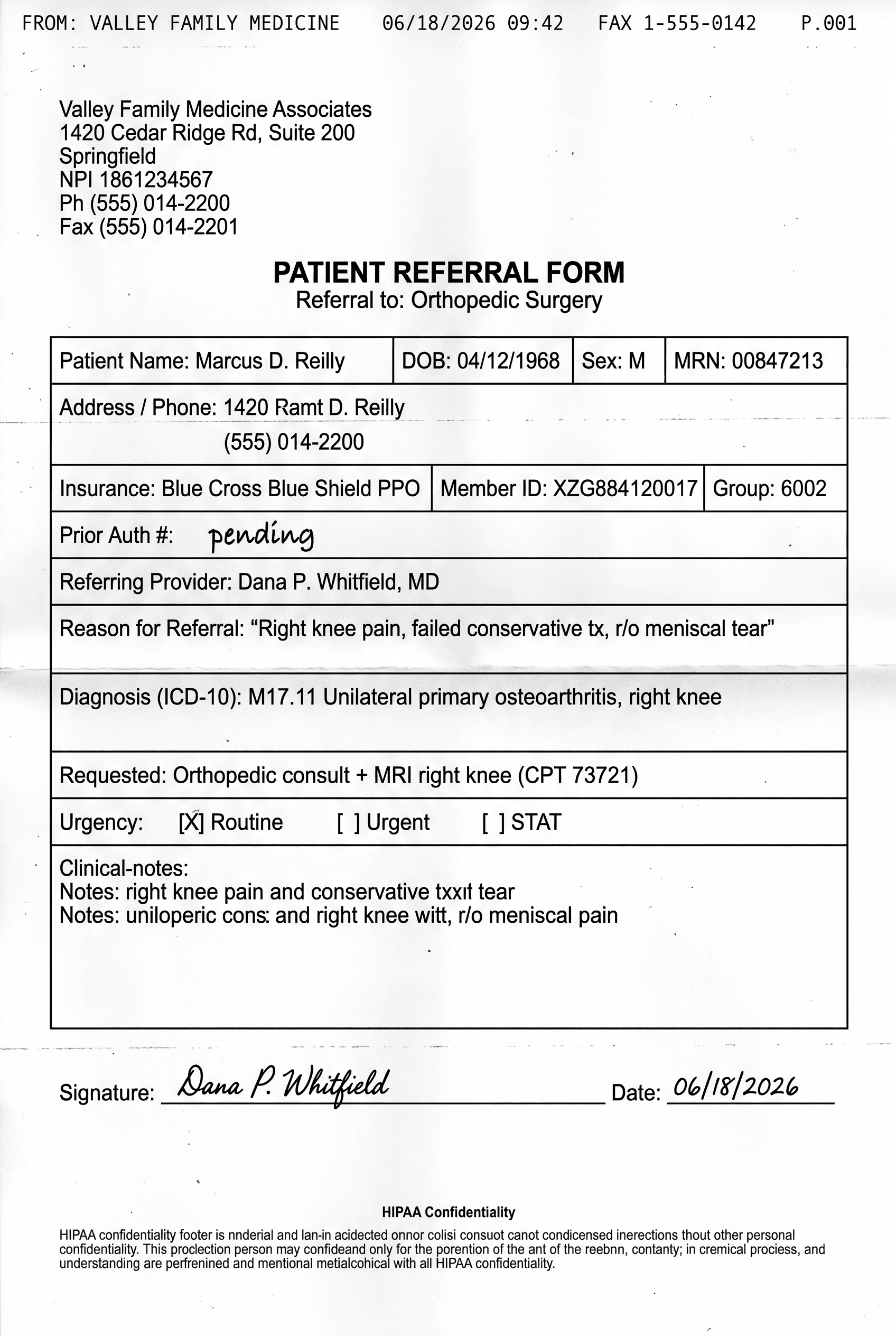
You send the patient to a specialist, and then nothing. Did they get seen? Often the first confirmation comes at the patient's next visit, if it comes at all.




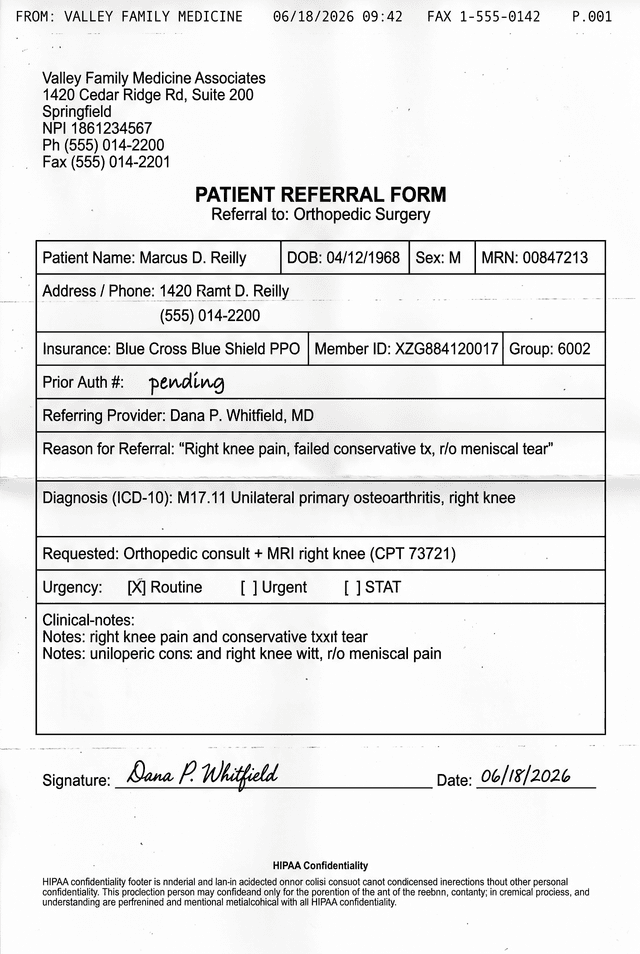
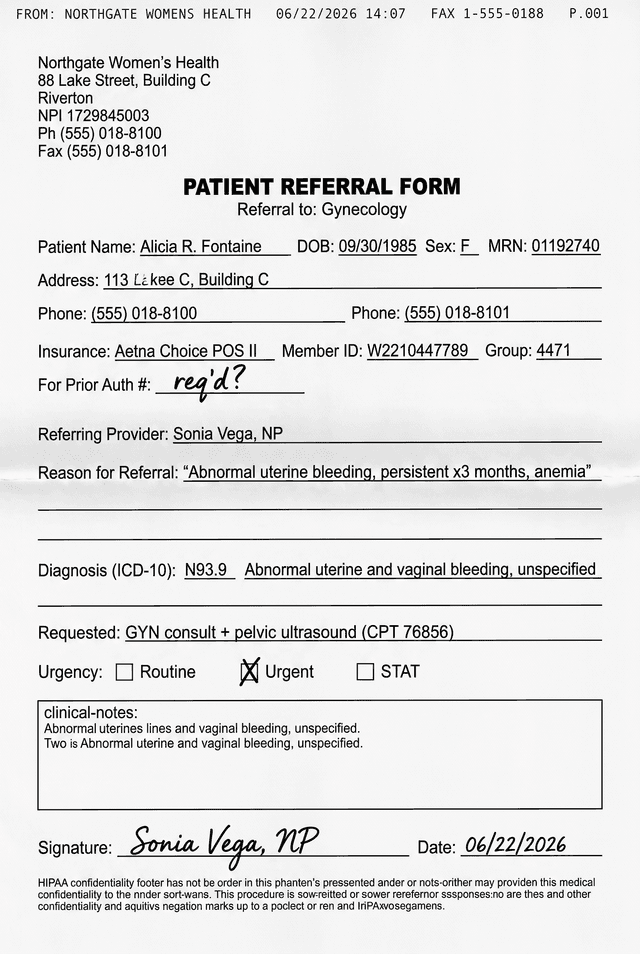
Every day your team sends patients to specialists, and then you're guessing. Did the patient get seen? Did the note ever come back? Linear closes the loop: we coordinate the referrals your providers send out, from matching the right specialist to the consult note landing back in your chart. We don't get you more referrals. We make sure the ones you send don't disappear.
Ask any referral coordinator what happens after they hit send. The answer is always the same: the referral disappears into a black hole. Coordinators spend their days chasing and chasing, with no way to know where anything landed.
You send the patient to a specialist, and then nothing. Did they get seen? Often the first confirmation comes at the patient's next visit, if it comes at all.
The consult note rarely comes back on its own. Staff chase it by phone and fax, and when it finally lands it frequently fails to file into the chart correctly, so the record stays incomplete.
Send to the wrong or out-of-network specialist and the damage is immediate: a frustrated patient and a value-based partner asking why you skipped their preferred network. Today, matching means coordinators cross-referencing directories by hand on every referral.
The instinct is to add headcount, but the math never improves. One multi-specialty group runs a referral department of 40 to 50 people, entirely manual, and still cannot keep up. Another fields at least 400 referrals a day. Even a lean practice ties up two full-time staff on referral tickets alone.
That's not a staffing problem you can hire away. It's a coordination problem. Linear automates the loop so your team stops chasing and starts working the exceptions that actually need a human, the same people, freed for higher-value work, not shown the door.
Linear runs the whole outbound journey on top of the EHR you already use, mostly software, with your team on the roughly 10% of cases that need a human. Here's the loop, step by step.
Matching honors the patient's and provider's choice first, and only searches for the best in-network, soonest-available specialist when no preference is set. You can also keep the rest of the automation and opt out of letting Linear book appointments at all.
Eligibility, in-network status, and any required authorization are confirmed before the appointment is booked. Verifying up front is what prevents the denial that would otherwise surface months later.
The referral goes out through the right channel, structured and complete.
Linear follows the referral to the visit and confirms the patient was actually seen, so the answer to "did they go?" is on the screen, not a mystery until the next appointment.
The consult note is pursued and captured automatically, ending the phone-tag-and-fax ritual.
The result lands in the right place in your chart, closing the loop and keeping everything in one system.
Automate the loop, not the team.
Measured at Aunt Martha's Health & Wellness, a 100-provider Federally Qualified Health Center. A named customer result, not an industry average.
From a ~35% baseline.
Within 90 days.
Across Athena and multiple payer portals.
“Linear Health automated our referral operations end to end. We process tens of thousands of referrals every month across Athena and multiple payer portals without manual work.”
For FQHCs and community health centers, closing the referral loop is a Joint Commission and HRSA expectation, not a nice-to-have, and most teams know their closure rates fall short of where they need to be.
For value-based organizations, an out-of-network or misrouted referral does more than frustrate a patient. It erodes the contract and the network relationship.
Linear's loop is built to satisfy both: documented, closed, and routed to the right network every time.
Outbound coordination is one workflow of many. The same engine handles the referrals coming in (fax intake and data entry), the prior authorizations that gate specialist visits, and the scheduling and reminders that get patients through the door, all on top of your existing EHR, all in one place.
Capture inbound referrals, reach patients fast, and book the consult before they fall through the cracks.
Learn more02 / 04Submit prior auths 10x faster, achieve 98% first-pass approval, and reduce delays from 7 days to 2 days.
Learn more03 / 04Reach patients by SMS, email, and voice, book directly in the EHR, send reminders, and recover no-shows.
Learn more04 / 04Ingest MCO gap files, filter false positives, reach patients, and document closure to UDS and HEDIS.
Learn moreBring a real workflow. In a working demo, we'll show the loop closing on your EHR, your payers, and your specialist network, not a generic slideshow.


Get the latest on AI healthcare coordination.