



Conversational AI in Healthcare: What Actually Works, What Doesn't, and How to Get It Right
Your front desk staff made 47 calls today. They connected with 12 patients. The rest went to voicemail, got busy signals, or never picked up. This is why conversational AI has moved from 'interesting technology' to 'existential necessity.'

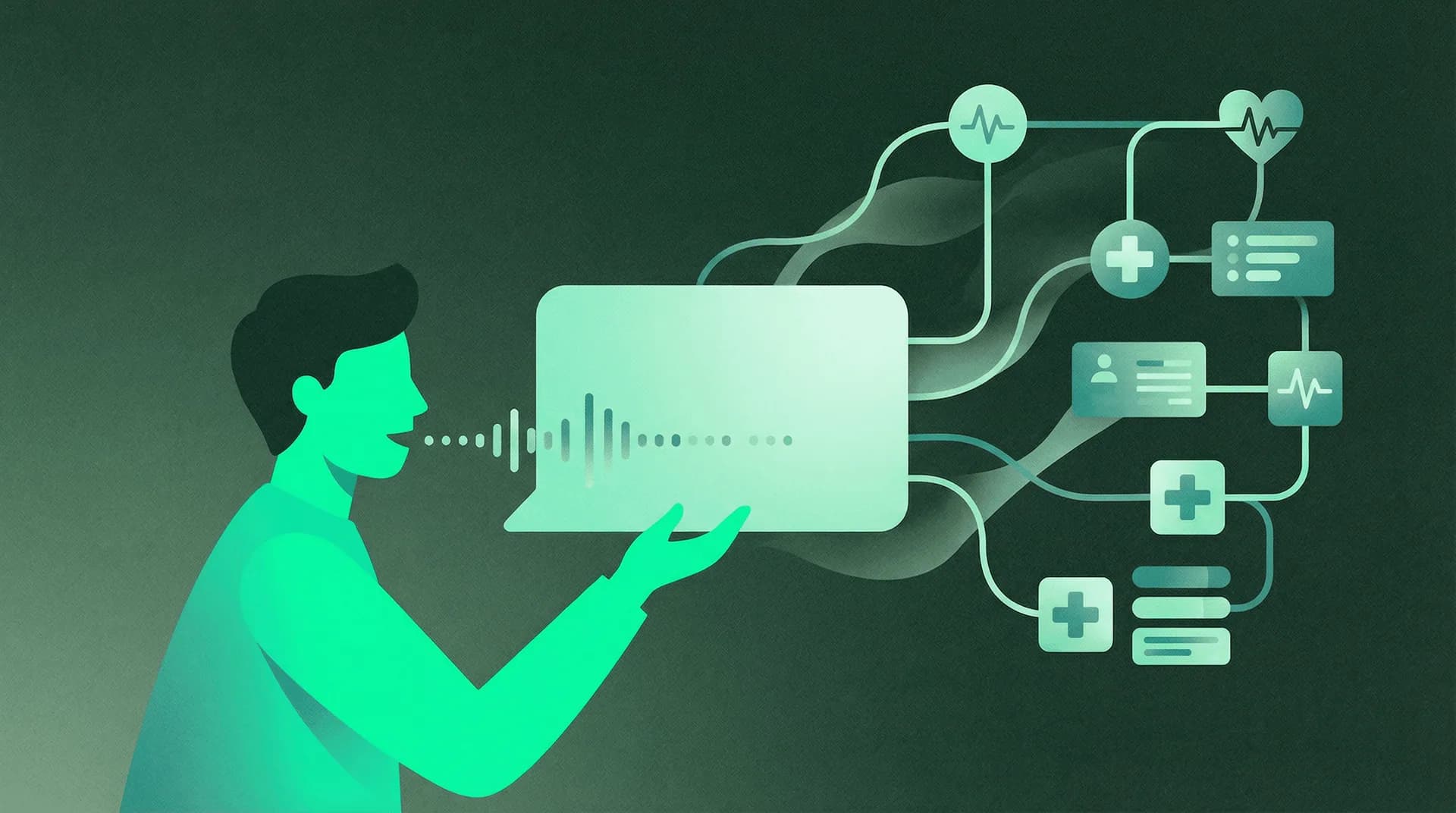
Your front desk staff made 47 calls today. They connected with 12 patients. The rest went to voicemail, got busy signals, or never picked up.
Meanwhile, a fax machine in the corner churned out referrals that nobody has time to process. Three patients called asking about their appointments. Two hung up after waiting on hold for eight minutes.
This is the reality of healthcare operations in 2026. And it's exactly why conversational AI in healthcare has moved from "interesting technology" to "existential necessity" for clinics trying to stay afloat.
But here's the problem. Most content about conversational AI reads like it was written by someone who's never set foot in a clinic. It's full of buzzwords, light on substance, and completely disconnected from what actually happens when a practice tries to implement this stuff.
This guide is different. We're going to break down what conversational AI technology in healthcare actually is, where it works brilliantly, where it falls flat, and exactly how to implement it without burning your budget or your staff.
What Conversational AI Actually Is (And What It Isn't)
Let's start with clarity. Conversational AI refers to technology that can understand natural human language and respond in kind. It's not a chatbot with pre-programmed answers. It's not a phone tree. And it's definitely not the robotic "Press 1 for appointments, Press 2 for billing" experience that makes patients want to throw their phones across the room.
True conversational AI uses three core technologies working together.
Natural Language Processing (NLP) breaks down what someone says or types into components the system can analyze. When a patient texts "I need to reschedule my Thursday appointment because my kid has a soccer game," NLP identifies the intent (reschedule), the timing (Thursday), and the context (conflict with another commitment).
Natural Language Understanding (NLU) goes deeper. It figures out what the patient actually means, even when they don't say it perfectly. "My stomach has been acting up" and "I've been having GI issues" trigger the same understanding, even though the words are completely different.
Natural Language Generation (NLG) creates responses that sound human. Not "Your appointment has been rescheduled. Confirmation number: 847291." Instead: "Got it! I moved your Thursday appointment to Friday at 2pm. Does that work with your schedule?"
The result is a system that can handle real conversations. Not scripts. Conversations.
What Conversational AI Is Not
This distinction matters because vendors love to blur the lines. Here's what doesn't count.
Rule-based chatbots follow decision trees. If the patient's question doesn't match a pre-programmed path, the bot fails. These are the systems that respond "I'm sorry, I didn't understand that" every third message.
Interactive Voice Response (IVR) systems route calls through menus. They're useful for simple routing but can't handle nuanced requests or adapt to how patients actually speak.
Robotic Process Automation (RPA) automates repetitive tasks but doesn't understand language. It clicks buttons and fills forms. It doesn't converse.
Ambient AI listens to doctor-patient conversations and generates documentation. It's transformative technology, but it's not conversational. It's observational.
When evaluating vendors, ask a simple question: "Can your system handle a request it's never seen before?" If the answer involves anything other than "yes," you're not looking at true conversational AI.
The Conversational AI in Healthcare Market: Why Now?
The numbers tell a clear story. The conversational AI in healthcare market hit $13.68 billion in 2024. By 2033, it's projected to reach $106.67 billion. That's a 25.71% compound annual growth rate.
But market size alone doesn't explain urgency. Three forces are converging that make conversational AI essential rather than optional.
The Staffing Crisis Has No End in Sight
The World Health Organization projects a global shortage of 10 to 11 million healthcare workers by 2030. In the US, we're already feeling it. Clinics can't hire fast enough. The people they do hire burn out within months.
You can't hire your way out of this problem. There simply aren't enough people.
Administrative Burden Is Crushing Clinical Care
Healthcare administrative waste costs $4.6 billion annually in the US alone. The average physician spends two hours on paperwork for every hour of patient care. Coordinators make dozens of calls daily, most of which went to voicemail.
Roughly 14% of all healthcare spending goes to administrative inefficiency. That's money that could fund better care, higher salaries, or expanded services.
Patients Expect More
Here's a stat that should concern every practice manager: 82% of healthcare consumers say they'd switch providers after a bad experience. Patients book dinner reservations, order groceries, and schedule haircuts from their phones in seconds. Then they call their doctor's office and wait on hold for fifteen minutes.
The gap between patient expectations and healthcare's operational reality grows wider every year. Conversational AI closes it.
Conversational AI Use Cases in Healthcare: 8 Applications That Actually Work
Let's get specific. These aren't theoretical possibilities. They're proven conversational AI applications in healthcare that clinics are using today to solve real problems.
1. Patient Scheduling and Appointment Management
This is the gateway use case. It's where most practices start, and for good reason.
A patient texts: "I need to see Dr. Martinez sometime next week, preferably mornings." The AI checks the schedule, identifies available slots, and responds: "Dr. Martinez has openings Monday at 9:30am and Wednesday at 10:15am. Which works better?"
The patient picks one. The AI books it, sends a confirmation, and updates the EHR. Total time: 45 seconds. No human intervention required.
The impact scales quickly. Practices using conversational AI for scheduling report 30 to 50% increases in appointment fill rates and 60% reductions in scheduling-related phone volume.
2. Referral Coordination
Referrals are healthcare's black hole. A PCP sends a patient to a specialist. The fax goes out. Then silence. Did the specialist receive it? Did the patient schedule? Did they show up? Most practices have no idea.
Conversational AI changes this. When a referral comes in, the system immediately contacts the patient via text: "Hi Sarah, Dr. Chen referred you to our cardiology department. I can help you schedule. Do you have your insurance card handy?"
The AI collects necessary information, verifies insurance, schedules the appointment, and sends reminders. If the patient doesn't respond, it follows up. If they miss the appointment, it reaches back out.
3. No-Show Reduction
No-shows cost the average practice $200 per missed appointment. For a busy specialty clinic, that's easily $200,000 or more annually in lost revenue.
Traditional reminder systems send generic texts that patients ignore. Conversational AI sends personalized messages and can actually handle responses: "Hi Marcus, just confirming your dermatology appointment tomorrow at 3pm. Reply YES to confirm, or let me know if you need to reschedule."
If Marcus replies "I forgot I have a work thing, can we do Thursday instead?", the AI handles the reschedule without human involvement.
4. Front Desk Call Handling
Most healthcare calls are routine. What time do you open? Where do I park? Can I refill my prescription? What's my balance?
Conversational AI can handle 60% or more of these calls automatically, 24 hours a day. Patients get immediate answers instead of voicemail. Staff get freed from repetitive questions to focus on complex patient needs.
The key is seamless escalation. When the AI encounters a situation it can't handle, like an upset patient, a complex clinical question, or an urgent matter, it transfers to a human with full context. The patient never has to repeat themselves.
5. Prior Authorization
Prior auth is universally despised. Staff spend hours navigating payer portals, tracking submissions, and managing denials. It's tedious, error-prone, and never-ending.
Conversational AI can't eliminate payer requirements, but it can automate the busywork. When a provider orders a procedure requiring auth, the system extracts clinical details from the EHR, formats the submission to match payer requirements, and submits automatically.
It then monitors approval status and alerts staff only when intervention is needed. A denial requiring appeal. A request for additional documentation. An unusual delay.
Practices using AI-assisted prior auth report 50% reductions in processing time and significant improvements in first-pass approval rates.
6. Post-Visit Follow-Up and Care Coordination
The patient leaves your office. Now what?
Traditional follow-up involves staff calling patients days later to check on them. Most calls go to voicemail. The ones that connect eat up staff time with conversations that could be handled asynchronously.
Conversational AI enables proactive, scalable follow-up: "Hi David, it's been three days since your procedure. How are you feeling? Any unexpected pain or swelling?"
The AI can triage responses, flagging concerning symptoms for clinical review while handling routine check-ins automatically. Patients feel cared for. Clinicians catch problems earlier. Staff workloads decrease.
7. Medication Adherence and Refills
Non-adherence costs the healthcare system $500 billion annually. Patients forget to take medications, run out of refills, or stop treatment because they don't understand its importance.
Conversational AI addresses this through persistent, personalized engagement: "Hi Linda, your blood pressure medication is due for a refill. Want me to send the request to your pharmacy?"
These systems can also check in on adherence, answer questions about side effects, and escalate concerns to clinical staff when warranted.
8. Multi-Language Patient Engagement
Roughly 25 million Americans have limited English proficiency. For these patients, navigating healthcare in English isn't just frustrating. It creates genuine barriers to care.
Conversational AI can engage patients in their preferred language across text, voice, and chat channels. A Spanish-speaking patient gets the same seamless scheduling experience as an English speaker. The system doesn't require dedicated bilingual staff for every language.
This isn't just a nice-to-have. FQHCs and safety-net providers serving diverse communities consider it essential infrastructure.
The Benefits of Conversational AI in Healthcare: What the Research Shows
Vendor marketing claims are everywhere. Let's look at what the evidence actually supports.
Staff Burnout Reduction
A January 2025 study from Yale, published in JAMA Network Open, examined AI scribe adoption and found that physicians using the technology had 74% lower odds of burnout compared to non-users. While this studied ambient AI rather than conversational AI specifically, it demonstrates the broader principle: reducing administrative burden directly impacts clinician wellbeing.
Separately, UChicago Medicine found that AI-assisted documentation reduced total EHR time by 8.5% and note composition time by more than 15%.
Patient Satisfaction
Counterintuitively, patients often prefer AI for certain interactions. A 2024 Talkdesk study found that 67% of patients feel more comfortable booking sensitive appointments, like mental health visits or sexual health consultations, with chatbots than with human staff.
A meta-analysis examining 15 studies found that in 13 of them, AI chatbot responses received higher empathy ratings than responses from human healthcare professionals. The AI wasn't actually empathetic, of course. But it consistently used language that patients experienced as caring and attentive.
Operational Efficiency
The operational gains are substantial and well-documented.
85% or higher call deflection rates for routine inquiries. 35 to 45% reductions in contact center costs. 79% improvements in speed-to-answer metrics. Appointment booking rate increases of 30 to 50%.
Individual case studies reinforce these figures. Baptist Health reported immediate savings exceeding $1 million after implementing conversational AI. Intermountain Health saw call abandonment rates drop by 85%.
Care Quality Improvements
When staff spend less time on administrative tasks, they can spend more time on clinical care. Practices using conversational AI for care gap closure report 40 to 70% improvements in gap identification and outreach.
For value-based care organizations, this translates directly to quality scores and revenue. One urban FQHC increased HEDIS scores by 10 points within a year of implementing AI-driven population health outreach.
Can Conversational AI Be Implemented in Healthcare? A Practical Roadmap
Talking about benefits is easy. Actually implementing conversational AI is harder. Here's what the process looks like in practice.
Phase 1: Assessment (Weeks 1-2)
Start by mapping your current workflows. Where do staff spend time on tasks that could be automated? Where do patients experience friction? What are your highest-volume, most repetitive interactions?
Common starting points include inbound appointment scheduling calls, referral intake and patient contact, appointment reminders and confirmations, and basic FAQ responses.
Don't try to automate everything at once. Pick one or two high-impact workflows and focus there.
Phase 2: Vendor Selection (Weeks 2-4)
The market is crowded. When evaluating tools for automating conversational AI in healthcare, focus on these criteria.
EHR Integration: Does the system connect with your EHR? Can it read schedules, pull patient information, and write back appointment data? Integration depth matters more than vendor promises.
Healthcare-Specific Training: General-purpose AI doesn't understand healthcare. You need systems trained on medical terminology, patient communication patterns, and clinical workflows.
Compliance Infrastructure: HIPAA compliance is non-negotiable. Look for Business Associate Agreements, encryption standards, audit logging, and clear data handling policies. HITRUST certification provides additional assurance.
Deployment Timeline: Avoid vendors who quote months-long implementations. Modern platforms can go live in 2-4 weeks.
Outcome Guarantees: Ask vendors to commit to specific metrics. If they won't guarantee results, question whether they can deliver them.
Phase 3: Configuration and Testing (Weeks 3-5)
This is where implementation either succeeds or fails. Key activities include configuring conversation flows for your specific workflows, training the system on your scheduling rules, provider preferences, and policies, building escalation paths for situations the AI shouldn't handle, and testing extensively with staff before patient-facing deployment.
Don't shortcut testing. Run every scenario you can imagine. Have staff try to break the system. Fix what surfaces before patients encounter it.
Phase 4: Pilot Deployment (Weeks 5-7)
Start with a limited deployment. Maybe one location, one department, or one workflow. Monitor everything.
How many conversations does the AI handle completely? Where does it escalate unnecessarily? Where does it fail to escalate when it should? What do patients say about the experience? What do staff say?
Use this data to refine configuration before broader rollout.
Phase 5: Full Deployment and Optimization (Week 8+)
Expand to additional workflows, locations, or channels based on pilot results. Continue monitoring and optimizing. The best implementations improve continuously based on real-world performance data.
The Ethics of Conversational AI in Healthcare
We can't discuss this technology without addressing ethical considerations. Patients trust healthcare organizations with their most sensitive information. That trust carries obligations.
Transparency
Patients should know when they're interacting with AI. This doesn't mean lengthy disclosures that interrupt the experience. A simple "Hi, this is an automated assistant from Dr. Chen's office" suffices. Hidden AI interactions erode trust.
Data Privacy
Conversational AI systems process protected health information. They must meet HIPAA requirements for data handling, transmission, and storage. Beyond compliance, organizations should minimize data collection to what's necessary and give patients clear control over their information.
Avoiding Bias
AI systems can perpetuate or amplify biases present in their training data. Healthcare organizations should evaluate systems for bias in language understanding, response generation, and escalation decisions. A system that struggles to understand certain accents or dialects fails patients who speak that way.
Clinical Boundaries
Conversational AI should not provide medical advice, diagnose conditions, or recommend treatments. Clear boundaries must exist between administrative support (which AI can handle) and clinical decision-making (which requires human expertise).
Responsible vendors design these boundaries into their systems. Responsible healthcare organizations verify they exist.
Human Oversight
AI should augment human judgment, not replace it. Staff should review AI performance, handle escalations appropriately, and maintain final authority over patient interactions. Automation without oversight creates risk.
A Conversational AI in Healthcare Case Study: What Real Implementation Looks Like
Theory is useful. Reality is better. Here's how one behavioral health organization transformed their operations.
The Challenge
A growing multi-site behavioral health group faced a common problem at scale. Referrals were stacking up. Staff couldn't contact patients fast enough. By the time they reached people, many had already found care elsewhere or given up entirely.
Administrative burden consumed their team. Each referral required 2-3 hours of manual work: reading faxes, creating charts, making calls, leaving voicemails, following up, scheduling, and documenting. At their volume, this meant full-time staff doing nothing but referral coordination.
The Solution
The group implemented conversational AI for their entire referral workflow. When a referral arrives, the system immediately parses the referral document and extracts patient information, creates or updates the patient chart in the EHR, contacts the patient via SMS within minutes, engages in a conversation to schedule an appropriate appointment, sends confirmation and reminders, and updates the referring provider on status.
If the patient doesn't respond to text, the system tries email. Then voice. It persists across channels with appropriate spacing until the patient either schedules or a human needs to intervene.
The Results
Within months, the group saw 50% reduction in administrative time, 3x faster patient response times, increased monthly revenue from improved scheduling efficiency, and staff redeployed from phone tag to higher-value activities.
Key Lessons
The group's success came from focusing on a specific, high-impact workflow rather than trying to automate everything simultaneously. They chose referral coordination because it represented significant time investment with clear metrics for improvement. They also invested in proper configuration and testing before going live. The AI understood their scheduling rules, provider preferences, and escalation criteria before patients ever interacted with it.
What's Next: The Evolution of Conversational AI Through 2030
The technology is advancing rapidly. Here's where it's heading.
Deeper EHR Integration
Current integrations are often superficial, just reading schedules and writing appointments. Future systems will have richer access to clinical data, enabling more sophisticated conversations. An AI might proactively reach out to a diabetic patient whose A1C has risen, combining administrative outreach with care coordination.
Multi-Modal Interactions
Voice, text, and chat will blend seamlessly. A patient might start a conversation via text, switch to voice when driving, and complete it through a patient portal. The AI maintains context across channels.
Agentic Capabilities
Today's conversational AI responds to requests. Tomorrow's will take initiative. Rather than waiting for a patient to ask about scheduling, the system might recognize that a follow-up is due and proactively reach out.
Clinical Decision Support Integration
While conversational AI won't provide medical advice, it will increasingly connect with clinical decision support systems. A patient reporting symptoms might be guided through a triage protocol that determines urgency and routes appropriately.
Ambient and Conversational AI Convergence
The line between conversational AI (patient-facing) and ambient AI (clinical documentation) will blur. Systems might listen to a clinical encounter, generate documentation, identify patient education needs, and then engage the patient after the visit with relevant follow-up information.
The Bottom Line
Conversational AI in healthcare isn't a nice-to-have anymore. It's infrastructure.
Practices that implement it effectively will handle more patients with fewer staff, reduce no-shows, improve referral completion, and deliver experiences that meet modern patient expectations.
Practices that don't will struggle with staffing shortages, administrative burden, and patient leakage to competitors who've figured this out.
The technology works. The evidence is clear. The market is growing at 25% annually because organizations see results.
The question isn't whether to implement conversational AI. It's how quickly you can do it well.
Frequently Asked Questions
What's the difference between conversational AI and a chatbot?
How long does conversational AI implementation take?
Is conversational AI HIPAA compliant?
Will conversational AI replace my staff?
What happens when the AI can't answer a question?
How do I measure ROI on conversational AI?