


Why Operational AI is Finally Working in Healthcare (And Clinical AI Isn't)
Healthcare AI has been promising transformation for two decades. Most of it has been theatre. Then you look at what's actually working in production, and it's not what anyone expected.

Healthcare AI has been promising transformation for two decades. Most of it has been theatre.
Pilot programmes that never scale. Clinical decision support tools that physicians ignore. Diagnosis algorithms that work in research papers but fail in practice.
Then you look at what's actually working in production, and it's not what anyone expected.
The Hartford HealthCare Reality Check
JP Morgan's 13th annual Healthcare Advisory Council brought together healthcare leaders to discuss AI implementation. One data point stood out: Hartford HealthCare deployed AI across six Connecticut hospitals and reduced length of stay by one full day per patient.
Not a pilot. Not a trial. Production deployment with measurable outcomes.
Their emergency department scheduling system: A task requiring three full-time employees working manually all month now completes in three seconds.
Clinical documentation AI rolled out across physician practices: Within weeks, documentation burden dropped whilst maintaining detailed records. Physicians reported unprecedented improvements in work satisfaction.
Notice what's working here. Not diagnosis tools. Not clinical decision support. Not the sexy AI everyone talks about.
Operational workflows. Scheduling. Documentation. Care coordination. The unglamorous infrastructure healthcare practices actually run on.
The Operational vs Clinical Divide
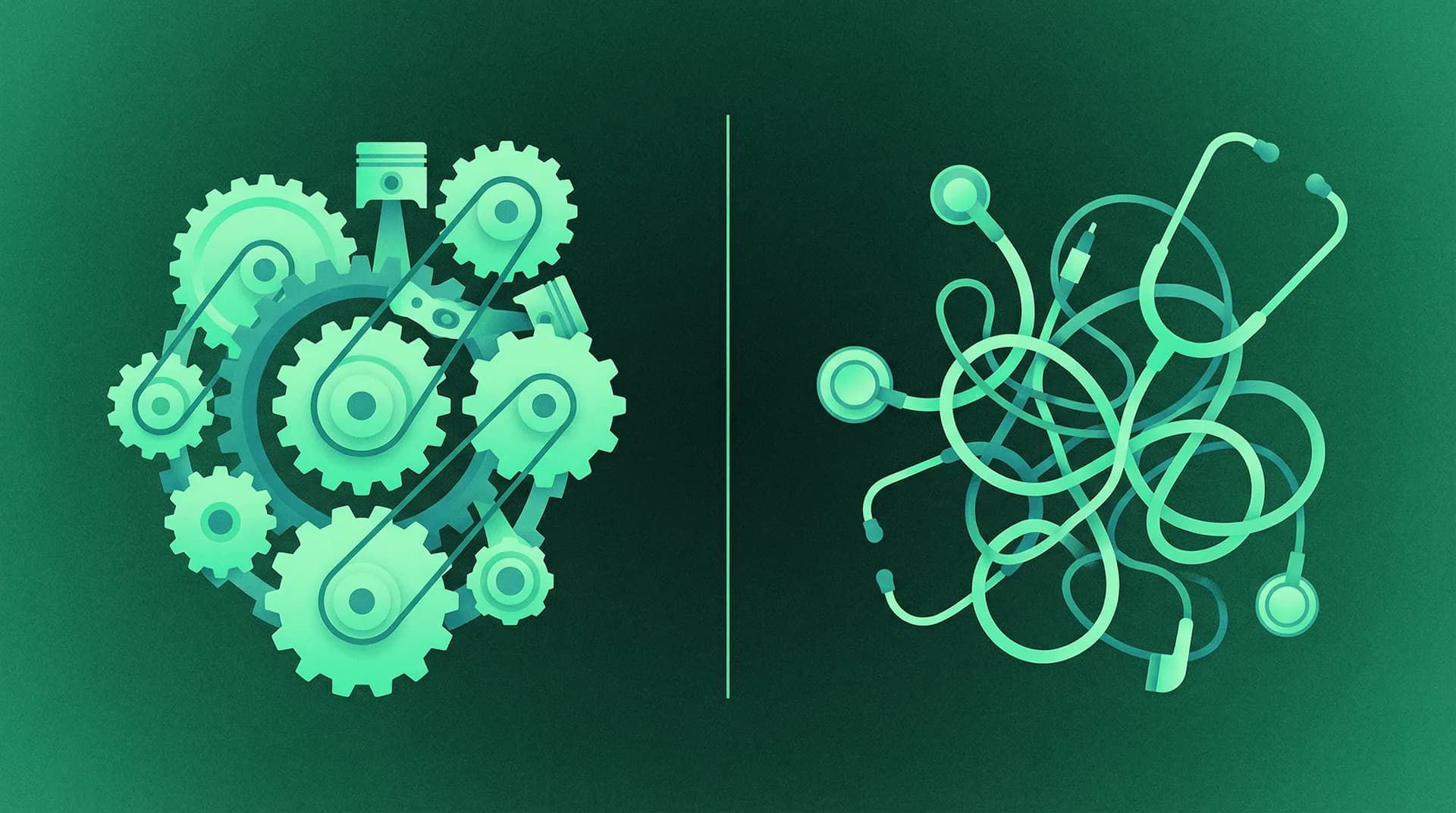
The pattern emerging from production healthcare AI deployments is clear: operational AI works, clinical AI struggles.
Why? The accuracy bar.
Clinical AI needs 99.9% accuracy and regulatory approval before deployment. Miss a diagnosis, someone dies. The liability is existential. The approval process is measured in years.
Operational AI needs to be better than manual processes, a dramatically lower bar. Humans make mistakes all the time in scheduling, documentation, referral coordination. AI doesn't need to be perfect. It needs to be more reliable than a burnt-out coordinator managing 200 referrals across three different systems.
This explains the deployment gap. Healthcare practices cite operational chaos as their number one problem. Yet 90% of healthcare AI funding flows to clinical tools.
Market opportunity and capital allocation are completely misaligned.
What's Actually Broken in Healthcare Operations
Hartford HealthCare's results expose something most people miss: the real constraint in healthcare isn't clinical capability. It's operational capacity.
Consider referral coordination. A practice receives a referral from a GP. What happens next?
In theory: Call the patient, schedule the appointment.
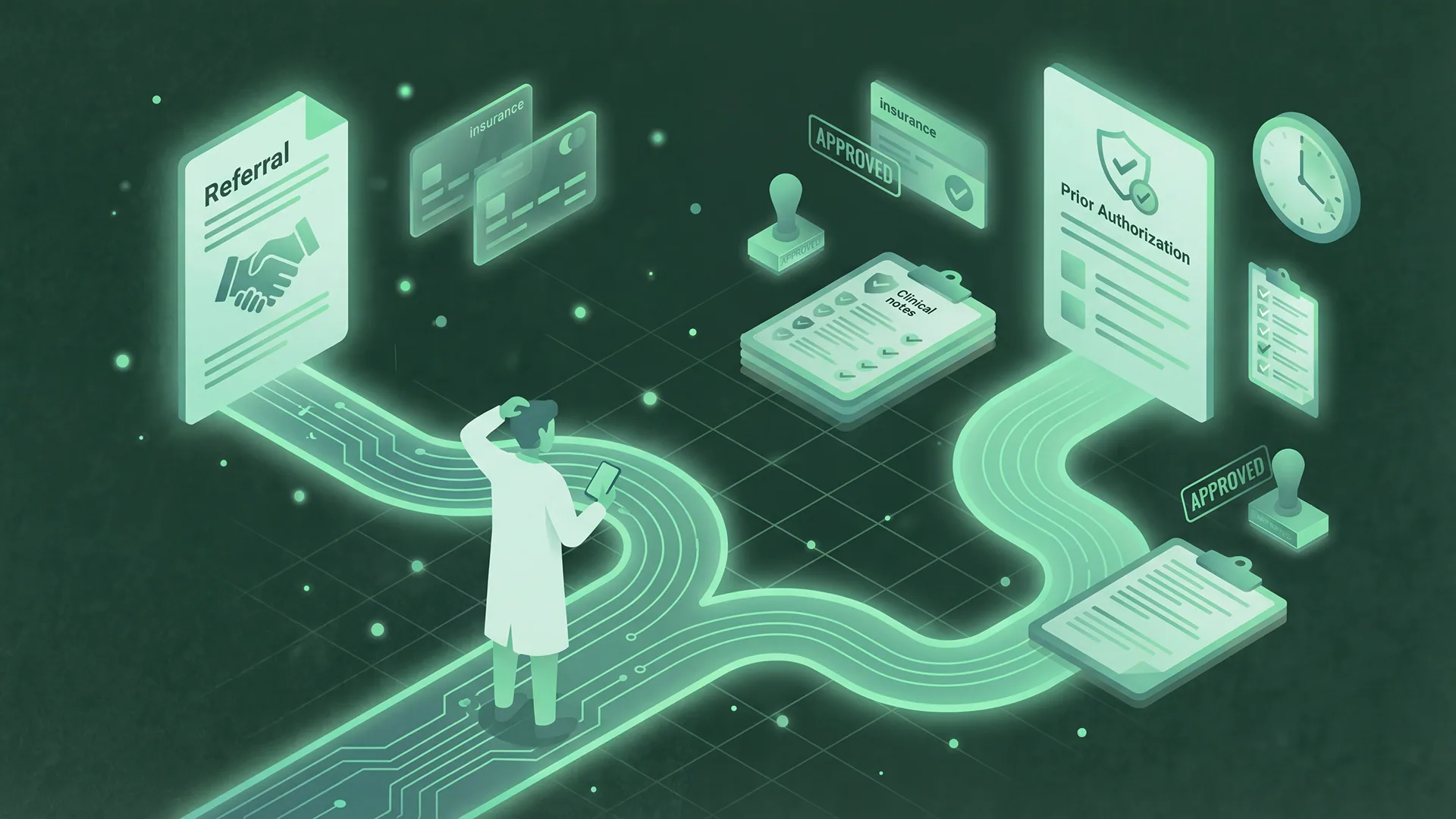
In reality: 17 steps between receiving that referral and confirming an appointment. Verify insurance eligibility. Check specialist availability. Confirm transportation options. Navigate language barriers. Handle prior authorisation. Follow up 3-5 times per referral. Document everything in 2-3 different systems.
This is why practices employ dedicated referral coordinators. This is why those coordinators burn out after 18 months.
The operational complexity multiplies across every workflow. Care gap closure. Appointment scheduling. Prior authorisation. Patient engagement. Each requires orchestrating multiple systems, managing edge cases, following up repeatedly.
Practices aren't drowning because they lack clinical expertise. They're drowning because operational workflows consume more resources than the clinical care itself.
The Administrative Burden Numbers
The data is stark. 87% hospital-based and 70% office-based physicians report administrative burden as their primary concern. Not malpractice. Not compensation. Not clinical complexity. Administrative burden.
This administrative overhead now consumes 30% of healthcare spending. $1.2 trillion annually. For context: that's more than the entire GDP of most countries.
But here's what's interesting: this isn't a technology deficit. Practices have EHRs. They have practice management systems. They have patient portals. They have tools for every individual task.
What they lack is orchestration. Someone, or something, to coordinate across all these systems, handle the exceptions, manage the follow-ups, and ensure nothing falls through the cracks.
Currently, that orchestration layer is human. Coordinators, medical assistants, front desk staff spending hours on tasks that are repetitive, predictable, and error-prone.
This is where operational AI fits. Not replacing clinical judgment. Replacing the manual coordination work that burns out staff and creates bottlenecks.
This orchestration layer is exactly what operational AI for healthcare is built to provide.
Why Operational AI Works When Clinical AI Struggles
Hartford HealthCare's success isn't accidental. It reflects structural advantages operational AI has over clinical applications.
First, the data availability problem.
Clinical AI needs massive datasets of patient outcomes, diagnoses, and treatments. This data is siloed, protected, and often incomplete. Training diagnostic AI requires navigating HIPAA, IRB approvals, and data sharing agreements that can take years.
Operational AI trains on process data: faxes, schedules, phone logs, referral patterns. This data is abundant, accessible, and continuously generated by every healthcare interaction.
Second, the integration challenge.
Clinical AI needs to integrate into clinical workflows, into the sacred space where physicians make life-and-death decisions. Physicians are rightfully sceptical. Regulatory barriers are immense. The integration points are sensitive.
Operational AI integrates into administrative workflows, the back office, the coordination layer, the unglamorous plumbing of healthcare delivery. The stakes are lower. The resistance is minimal. The integration points are well-defined.
Third, the feedback loop.
Clinical AI struggles with feedback. Did the diagnosis improve outcomes? You won't know for months or years. The signal is weak and delayed.
Operational AI gets immediate feedback. Did the referral convert to an appointment? Did the patient respond to outreach? Did the schedule optimise correctly? The signal is strong and immediate, enabling rapid iteration.
What Production Operational AI Looks Like
Hartford HealthCare's deployment offers a template. Production operational AI isn't a single tool; it's an orchestration layer across multiple workflows.
Referral coordination AI: Receives referrals from any source, extracts patient information, verifies eligibility, contacts patients via their preferred channel, schedules appointments, and follows up automatically. Coordinators shift from doing this work to supervising the system.
Scheduling AI: Optimises provider schedules based on appointment types, patient preferences, and historical patterns. Handles rescheduling and cancellation cascades automatically.
Documentation AI: Listens to clinical encounters, generates notes in real-time, and suggests coding. Physicians review and approve rather than create from scratch.
The coordinator role shifts from doing the work to supervising the system, handling exceptions, managing complex cases, and ensuring quality.
This is the model that's working in production. Not AI replacing humans. AI handling volume so humans can focus on complexity.
The Resistance to Operational AI
Despite clear evidence, operational AI faces resistance. Understanding why helps navigate adoption.
The glamour gap: Operational AI isn't exciting. Investors want to fund "revolutionary diagnostics with AI" not "making scheduling slightly less terrible." This creates a funding gap: lots of capital chasing clinical AI moonshots, less capital for operational infrastructure.
The attribution problem: Clinical AI gets clear attribution. "AI diagnosed the cancer." Operational AI's impact is diffuse. Patients don't know AI scheduled their appointment. They just know they got booked. The improvements accrue to staff satisfaction, operational efficiency, and margin, metrics that don't make headlines.
The change management problem: operational AI requires process changes. Coordinators need to shift from doing to supervising. Workflows need redesign. Some roles become obsolete whilst new ones emerge. This transition is organisationally difficult, even when the end state is obviously better.
The Market Reality
Healthcare operational spending exceeds $1 trillion annually in the US alone. A significant portion of this is coordination overhead, the glue work connecting systems, managing workflows, ensuring nothing falls through.
The market for AI that addresses this coordination overhead is enormous and underserved. While clinical AI companies compete for regulatory approval and hospital pilot programmes, operational AI can deploy today, demonstrate ROI immediately, and scale across thousands of practices.
Hartford HealthCare's results point to a larger pattern: the highest-impact AI deployments in healthcare won't be diagnostic tools or treatment algorithms. They'll be operational systems that make healthcare practices function more efficiently.
The practices that recognise this early, that invest in operational AI whilst their competitors wait for clinical AI to mature, will have structural advantages in efficiency, patient throughput, and staff satisfaction.
The future of healthcare AI isn't in the lab. It's in production.
Frequently Asked Questions
What is operational AI in healthcare?
Why is operational AI finally working in healthcare now?
How does operational AI differ from clinical AI?
What results can healthcare organizations expect from operational AI?