

What is Referral Management in Healthcare? A Complete Overview
Every day, thousands of patients receive a referral from their primary care provider and never make it to the specialist. The referral order sits in a queue. A coordinator eventually calls, gets voicemail, leaves a message. The patient doesn't call back. This is the referral management problem, and it's costing healthcare organizations billions.


Referral management is the system of processes, people, and technology that moves a patient from a provider's referral order to a completed specialist appointment. Done well, it ensures patients receive timely specialty care while keeping referring providers informed and healthcare organizations financially healthy. Done poorly, which is the norm, it creates administrative burden, patient frustration, and revenue leakage.
This article explains what referral management actually involves, why it matters more than most healthcare leaders realize, and what separates organizations that do it well from those drowning in incomplete referrals.
The Referral Lifecycle: From Order to Completion
Understanding referral management requires understanding the full journey a referral takes. It's more complex than most people outside operations realize.
Stage 1: Referral Creation
A primary care provider decides a patient needs specialty care: a gastroenterologist for persistent GI symptoms, a cardiologist for an abnormal EKG, a psychiatrist for treatment-resistant depression. The provider creates a referral order in the EHR, typically specifying the specialty needed and the clinical reason.
This sounds simple, but problems start here. Many EHRs require minimal information for a referral order, so the details necessary for scheduling, patient contact information, insurance details, clinical urgency, may be incomplete or absent. Some providers create referrals at the end of visits and move quickly, leaving coordinators to hunt down missing information.
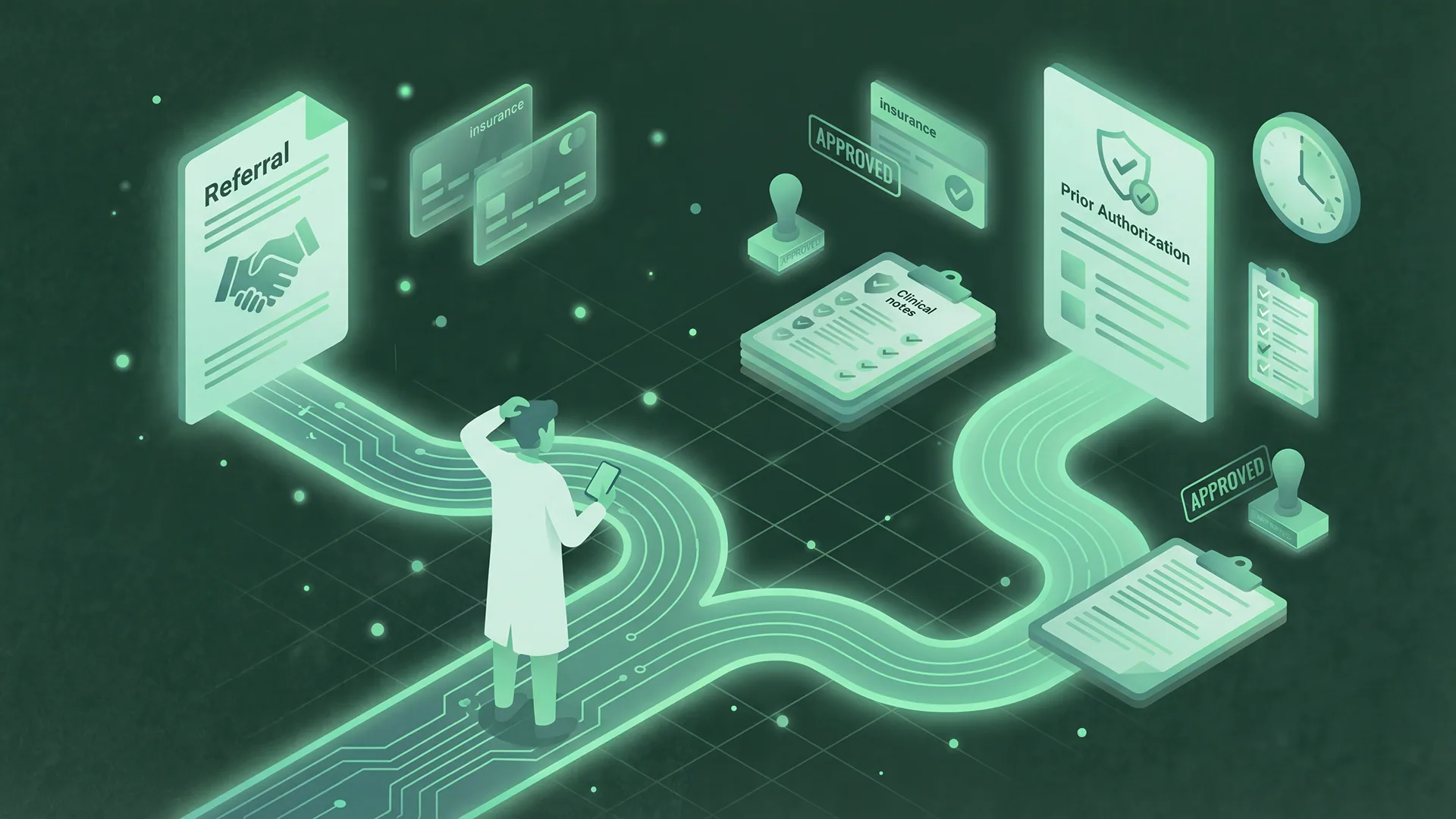
Stage 2: Insurance Verification and Prior Authorization
Before many specialist appointments can be scheduled, someone needs to verify the patient's insurance covers the service and obtain prior authorization from the payer. This is where referrals frequently stall.
Prior authorization requires submitting clinical documentation to a payer portal, waiting for approval (typically 2-7 days), handling requests for additional information, and managing denials. For a busy coordinator handling dozens of referrals daily, this means logging into multiple payer portals, tracking authorization statuses, and following up on pending requests. It's tedious, time-consuming, and error-prone.
Stage 3: Patient Outreach and Education
Once authorization is secured (or if none is required), someone needs to contact the patient to provide specialist information, explain what to expect, and facilitate scheduling. This sounds straightforward. In practice, it's where referral management most commonly fails.
Patients don't answer calls from unknown numbers. They're at work during business hours. They don't check voicemail. Coordinators leave messages that go unreturned, make multiple call attempts, and eventually move on to the next referral while the uncontacted patient falls through the cracks.
Stage 4: Scheduling
Assuming the coordinator reaches the patient, the next step is scheduling an appointment. For inbound referrals to specialty practices, this means finding an available slot that works for the patient's schedule. For outbound referrals from primary care, it may mean coordinating with an external specialist office, matching patients to providers who accept their insurance, and navigating geographic preferences.
The friction here is significant. Patients often can't commit to appointment times during a phone call; they need to check work schedules, arrange transportation, or consult family members. Phone tag ensues. Or the specialist has a 6-week wait, and patients scheduled that far out are more likely to no-show.
Stage 5: Pre-Visit Preparation
Once scheduled, patients may need pre-visit preparation: completing intake forms, providing medical records, following pre-procedure instructions. A patient scheduled for a colonoscopy, for example, needs detailed prep instructions and often a pre-procedure phone call to review the process.
Many practices still handle this manually, with staff calling patients days before appointments to review requirements. It works, but it consumes coordinator time and doesn't scale.
Stage 6: Appointment Completion
The referral isn't complete when the patient schedules. It's complete when they actually show up. No-show rates for specialist appointments typically range from 10-30% depending on specialty, patient population, and how far in advance appointments are booked.
Each no-show represents lost revenue (an empty slot that could have served another patient), wasted coordinator effort (all that work getting them scheduled), and a gap in the patient's care. Yet many practices track scheduling as their endpoint and never measure actual completion.
Stage 7: Closed-Loop Documentation
Finally, after the specialist visit, consultation notes should flow back to the referring provider. This closes the loop, allowing the PCP to coordinate ongoing care and know that their patient received the recommended specialty service.
In practice, this often doesn't happen. Specialist offices are busy and don't always send notes proactively. Referring providers don't always follow up. The loop stays open, and the left hand doesn't know what the right hand did.
Why Referral Management Matters More Than You Think
Healthcare organizations often underestimate the impact of referral management on their operations and finances. Here's what the data shows:
Revenue Leakage is Real
For specialty practices, every referral that doesn't convert to a completed appointment is revenue that walks out the door. At an average reimbursement of $200-400 per specialty visit, a practice losing 30% of its 400 monthly referrals is leaving $24,000-$48,000 on the table every month.
For primary care groups managing value-based care contracts, incomplete outbound referrals create care gaps that affect quality scores. Lower scores mean lower bonus payments, potentially costing hundreds of thousands annually.
Patient Outcomes Suffer
Referrals aren't created for administrative convenience. They're created because patients need specialty care. When referrals don't complete, conditions worsen or go untreated.
A patient referred to cardiology for chest pain who never makes it to an appointment is at higher risk for an adverse cardiac event. A patient referred to behavioral health during a crisis who can't navigate the referral process may deteriorate without intervention. These aren't abstract concerns; they're real consequences of broken referral systems.
Staff Burnout is Accelerating
Referral coordination is repetitive, frustrating work. Coordinators spend hours on hold with payer portals, leave voicemails that never get returned, and watch referrals age out despite their efforts. It's no surprise that healthcare administrative staff turnover exceeds 25% annually in many organizations.
The best coordinators don't want to spend their days playing phone tag. They want to solve problems, help patients navigate barriers, and do work that makes a difference. When referral management systems force them into low-value repetitive tasks, they burn out and leave.
What Good Referral Management Looks Like
Organizations that excel at referral management share common characteristics. They don't rely solely on manual processes, but they also don't expect technology to solve everything. Here's what works:
Process Clarity
Everyone knows what happens at each stage of the referral lifecycle. There's a defined workflow for which referrals require authorization, how outreach sequences proceed, when escalation happens, and who's responsible for each step. This sounds obvious, but many organizations have informal processes that vary by coordinator and shift.
Proactive Outreach
Rather than waiting for patients to call back, effective organizations reach patients through multiple channels, SMS, email, and phone, at times when patients are likely to respond. Text messages sent in the early evening have higher response rates than phone calls made at 10 AM when patients are at work.
The best organizations contact patients within hours of referral creation, not days. That window of motivation when a patient leaves their PCP's office closes quickly.
Self-Service Options
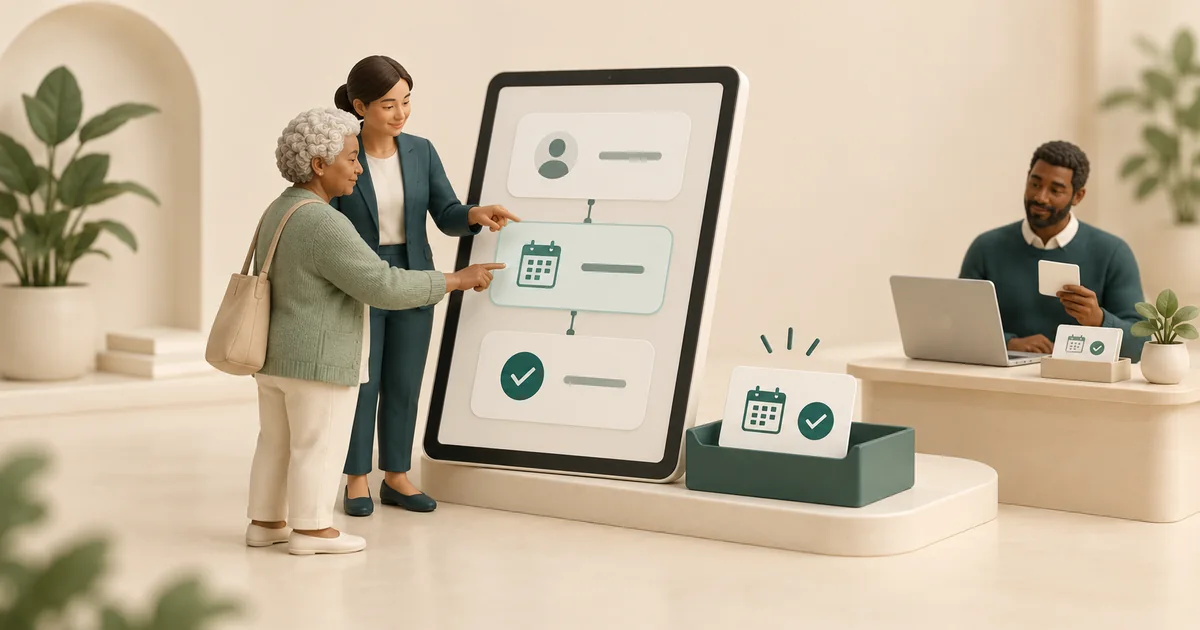
Patients increasingly expect to handle transactions digitally. Enabling patients to schedule specialist appointments from their phone, complete intake forms online, and communicate via text rather than phone reduces coordinator workload while improving patient experience.
Tracking to Completion
Organizations that measure referral success track completion, not just scheduling. They know which referrals convert to appointments, which patients no-show, and where in the lifecycle referrals are falling out. This data reveals bottlenecks and guides improvement efforts.
Closed-Loop Communication
Referring providers receive confirmation when their patients schedule and complete specialty appointments. Consultation notes flow back automatically. This strengthens referral relationships and ensures care coordination.
The Role of Technology
Manual referral management doesn't scale. A coordinator can handle 20-30 referrals per day with manual processes: phone calls, portal logins, documentation. But that workload increases linearly with referral volume while efficiency stays flat.
Technology can automate significant portions of the referral workflow:
Automated Detection
Software monitors EHR systems for new referral orders and initiates workflow immediately, rather than waiting for coordinators to notice new items in a queue.Prior Authorization Submission
Rather than coordinators logging into payer portals manually, automation can submit authorization requests, monitor status, and alert staff to exceptions.Multi-Channel Outreach
Automated systems can contact patients via SMS and email within minutes of referral creation, escalating to phone calls when digital channels don't receive responses.Self-Scheduling
Patients can book appointments directly from their mobile devices, eliminating phone tag and after-hours scheduling friction.Reminder Sequences
Automated reminders reduce no-shows without consuming coordinator time.Closed-Loop Tracking
Software can monitor appointment completion and chase specialist offices for consultation notes.
Outbound referral coordination tracks and closes the loop on referrals your practice sends out.
Our inbound referral coordination solution automates fax intake, outreach, and scheduling across the lifecycle.
Common Referral Management Mistakes
In working with healthcare organizations on referral automation, I've seen the same mistakes repeatedly:
Mistake 1: Treating Tracking as Management
Many organizations implement referral tracking software and consider the problem solved. They can now see where referrals stand in the process, but someone still has to move them forward manually. Tracking without automation creates visibility without efficiency.
Mistake 2: Single-Channel, Delayed Outreach
The biggest patient engagement mistake is forcing patients into a single communication channel on the coordinator's schedule rather than meeting patients where they prefer to engage. Some patients respond best to text messages. Others prefer email. Some actually want a phone call. The key is offering options and responding instantly.
When a coordinator finally gets to a referral two days after it was created and calls during business hours while the patient is at work, that's a recipe for phone tag. When an AI-powered system reaches out within minutes of referral creation, via the patient's preferred channel, available when the patient is available, evenings, weekends, whenever they check their phone, response rates increase dramatically.
Mistake 3: Measuring Scheduling Instead of Completion
A referral scheduled is not a referral completed. Organizations that track scheduling as their primary metric miss the 15-30% of patients who no-show and don't understand their true completion rates.
Mistake 4: Neglecting Referring Provider Communication
For specialty practices, referral sources are the lifeblood of the business. PCPs who send referrals and never hear what happened to their patients eventually stop sending referrals. Closed-loop communication isn't just operationally valuable; it's relationship management.
Mistake 5: Underinvesting in Prior Authorization
Many organizations treat prior auth as a necessary evil and don't systematically improve their processes. Yet authorization delays are the leading cause of patient-not-reached issues. By the time authorization comes through, patients have forgotten about the referral or given up.
The Future of Referral Management
Healthcare is moving toward value-based care models where care coordination matters more than ever. Organizations will be measured on whether patients complete recommended specialty care, not just whether referrals were created.
AI and automation are transforming what's possible. Systems that once required significant manual intervention can now handle complex workflows autonomously, from understanding unstructured fax content to navigating payer portal interfaces to engaging patients in natural language conversation.
The organizations investing in referral management infrastructure now will have significant advantages as value-based care becomes dominant. Those relying on manual processes will find themselves with unsustainable coordinator-to-referral ratios and care gaps they can't close.
The Regulatory Push: Why Referral Management Is Now a Compliance Issue
Referral management has traditionally been an operational choice. Organizations that invested in it captured more revenue and delivered better patient experiences. Organizations that didn't simply accepted the inefficiency.
That's changing. CMS has launched several programs in 2025 and 2026 that make referral coordination infrastructure a regulatory necessity rather than an optional investment.
Prior Authorization API Mandate (January 2027)
CMS now requires payers to accept electronic prior authorization submissions via FHIR APIs. Organizations that can't submit electronically will face MIPS penalties of up to 9% on Medicare payments.TEAM Model (Active January 2026)
The Transforming Episode Accountability Model is now mandatory for hospitals in 188 metropolitan areas. CMS requires participating hospitals to include referral to primary care services in discharge planning.ACCESS Model Co-Management Codes (July 2026)
The new ACCESS Model introduces billing codes (approximately $100 annually per patient) that compensate referring providers for coordination activities when they send patients to participating organizations.Ambulatory Specialty Model (January 2027)
For the first time, CMS will hold individual specialists accountable for cost and quality outcomes. Specialists must have documented contractual relationships with primary care providers.
Getting Started
If your organization is struggling with referral management, start by understanding your current state:
What's your referral volume?
Total monthly referrals, broken down by inbound (to your organization) and outbound (to external specialists).What's your completion rate?
Of referrals created, what percentage result in completed specialist appointments? If you don't know this number, you can't improve it.Where do referrals fall out?
Map your referral lifecycle and identify stages with the highest dropout rates. Is it patient contact? Scheduling? No-shows?How much time do coordinators spend on referrals?
Estimate the hours devoted to referral-related tasks. This helps calculate potential ROI from automation.What's your technology stack?
Which EHR(s), what existing referral tools, what patient communication systems? Understanding your infrastructure guides technology selection.
With this baseline, you can evaluate whether process improvements, technology investments, or both will move the needle.
Conclusion
Referral management is one of healthcare's most impactful operational problems, and one of its most solvable. The technology exists to automate the repetitive work that consumes coordinator time. The best practices are well-documented. The ROI is clear for organizations with meaningful referral volume.
What's often missing is leadership attention. Referral coordination doesn't have the urgency of clinical emergencies or the visibility of revenue cycle management. It runs in the background, slowly leaking revenue and creating care gaps while everyone focuses elsewhere.
The organizations that treat referral management as a strategic priority, investing in process clarity, automation, and measurement, will capture the revenue, quality scores, and referral relationships that others leave on the table.
Frequently Asked Questions
What is referral management in healthcare?
Why is referral management important?
What are the main challenges in healthcare referral management?
How can technology improve referral management?
Related case studies
- Case Study: Aunt Martha's Health & Wellness: How a 100-provider FQHC automated 10,000+ monthly referrals and coordination events.
- Case Study: Texas Sleep Medicine: How a specialty practice eliminated a 37% missed call rate and replaced five tools with one system.