
Care Gap Closure Automation
A comprehensive guide to automating care gap closure for FQHCs, primary care groups, and value-based care organizations. Covers what care gap closure is, why gaps stay open, the 6-step automated workflow, HEDIS and UDS measures, evaluation criteria, and implementation timelines.
What is Care Gap Closure?
- Care gap closure is the end-to-end process of identifying patients overdue for preventive or chronic care services, reaching out to them, scheduling appointments, and documenting completed visits.
- It goes beyond care gap identification (finding gaps) to include outreach, scheduling, and closed-loop reporting.
- Automation replaces manual phone calls and spreadsheets with AI-driven workflows: MCO file ingestion, patient outreach via SMS/voice/email, and direct EHR scheduling.
- Closing more gaps improves HEDIS scores, UDS measures, CMS Stars ratings, and value-based care contract revenue.
Why Care Gaps Stay Open: The Operational Reality
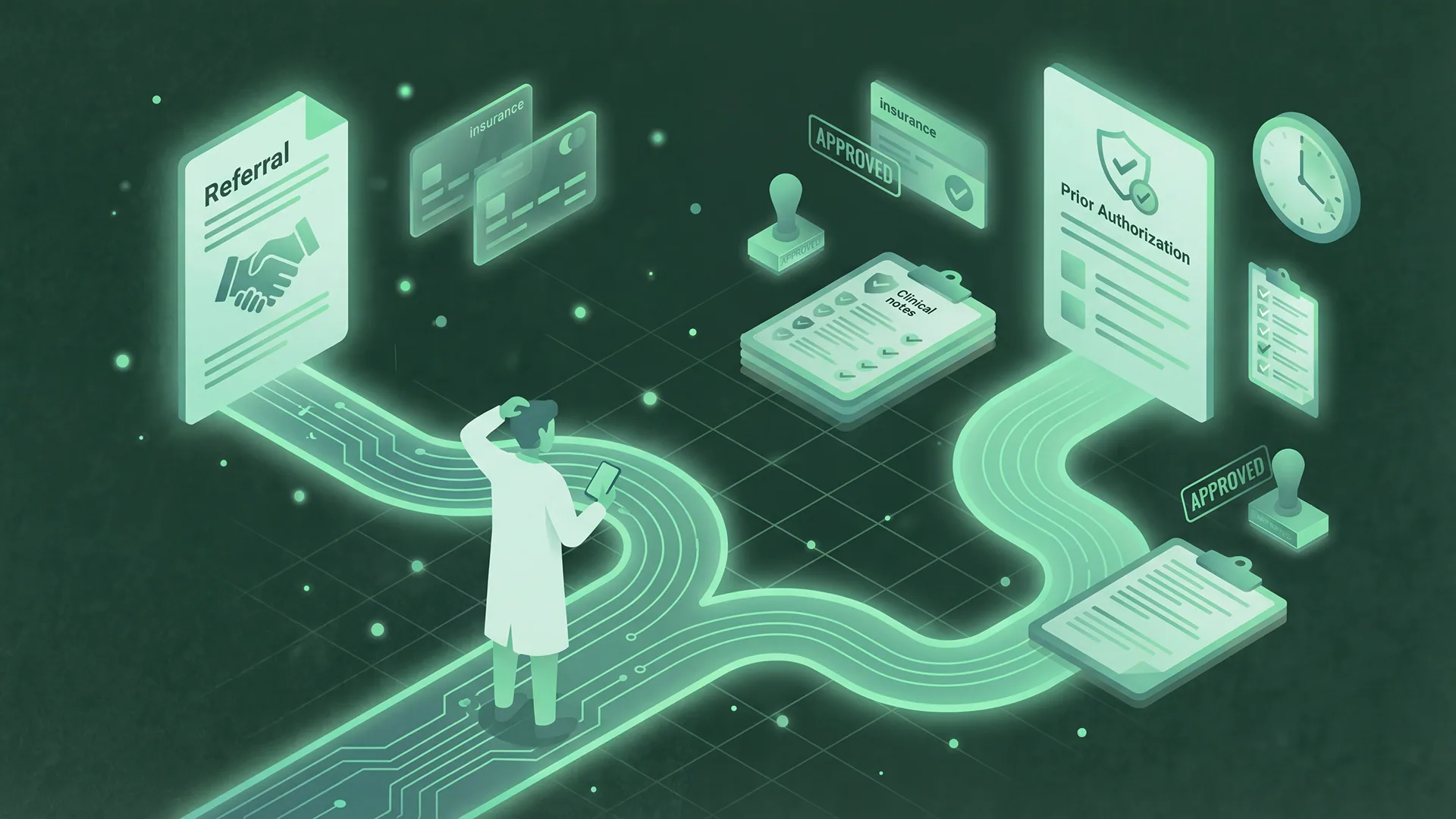
Most care gaps do not stay open because clinics lack awareness. They stay open because the operational workflow to close them is manual, fragmented, and does not scale. The typical closure process involves:
- Receiving MCO gap files in different formats from multiple payers, each with their own schemas and timelines
- Manually cross-referencing gaps against the EHR to filter out false positives from claims lag
- Staff making 40-60 phone calls per day, reaching fewer than 25% of patients
- No systematic prioritization: high-impact gaps get the same treatment as low-impact ones
- Scheduling done through separate workflows, creating data entry duplication
- No closed-loop tracking: clinics cannot prove gaps were closed without manual chart review
- UDS and HEDIS reporting requires pulling data from multiple systems into spreadsheets
The result: organizations know which gaps exist but cannot operationally close them at scale. Adding more staff provides linear improvement but does not solve the structural workflow problem.
Manual vs. Automated Care Gap Workflows
| Workflow Step | Manual Process | Automated Process |
|---|---|---|
| Gap data ingestion | Download files, reformat into spreadsheets, reconcile across payers | Automated file ingestion with format normalization and payer schema mapping |
| Validation | Staff manually checks each gap against EHR records | AI cross-references against EHR data in real-time, eliminates false positives |
| Prioritization | First-in-first-out or no systematic priority | Risk stratification by gap severity, quality measure impact, and patient engagement likelihood |
| Patient outreach | 40-60 phone calls/day per FTE, under 25% contact rate | Multi-channel outreach (SMS, voice, email) reaching hundreds simultaneously |
| Scheduling | Separate workflow, manual EHR entry, double-booking risk | Direct EHR scheduling with provider matching and self-scheduling links |
| Documentation | Manual chart review and reporting post-visit | Pre-visit notes auto-generated, post-visit closure documented, reports for UDS/HEDIS produced automatically |
The 6-Step Automated Care Gap Closure Workflow
- 1
Data Ingestion
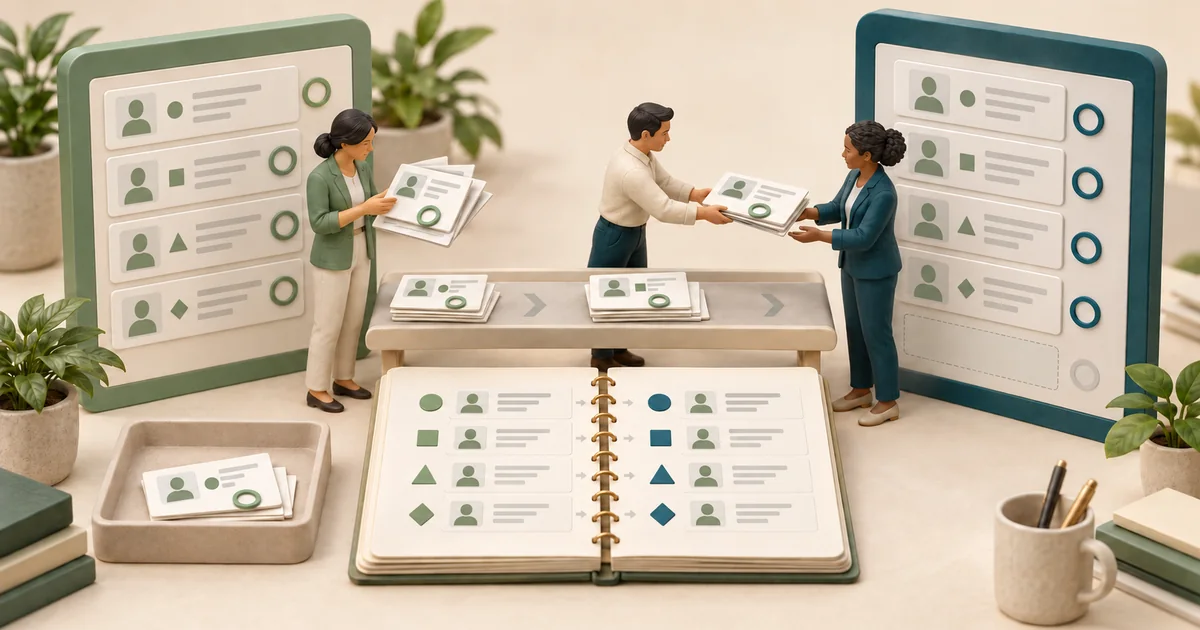
Ingest MCO gap files from managed care organizations, EHR quality data, and claims feeds. The system processes multiple file formats and payer-specific schemas, normalizing the data into a unified gap registry.
- 2
Validation and Cross-Reference
Cross-reference gap data against current EHR records to identify true care gaps. Eliminate false positives caused by claims lag, documentation that has not yet been processed, services completed at other facilities, or appointments already scheduled.
- 3
Risk Stratification and Prioritization
Score and prioritize patients based on gap severity, number of open gaps, appointment history, likelihood of engagement, and quality measure impact. High-value gaps affecting multiple quality measures or contract thresholds are prioritized first.
- 4
Multi-Channel Patient Outreach
Conduct automated patient outreach via SMS, AI voice calls, and email. Messages are personalized based on gap type, patient preferences, and language (English, Spanish, and other configurable languages). Built-in consent management ensures TCPA compliance with opt-out tracking.
- 5
Intelligent Appointment Scheduling
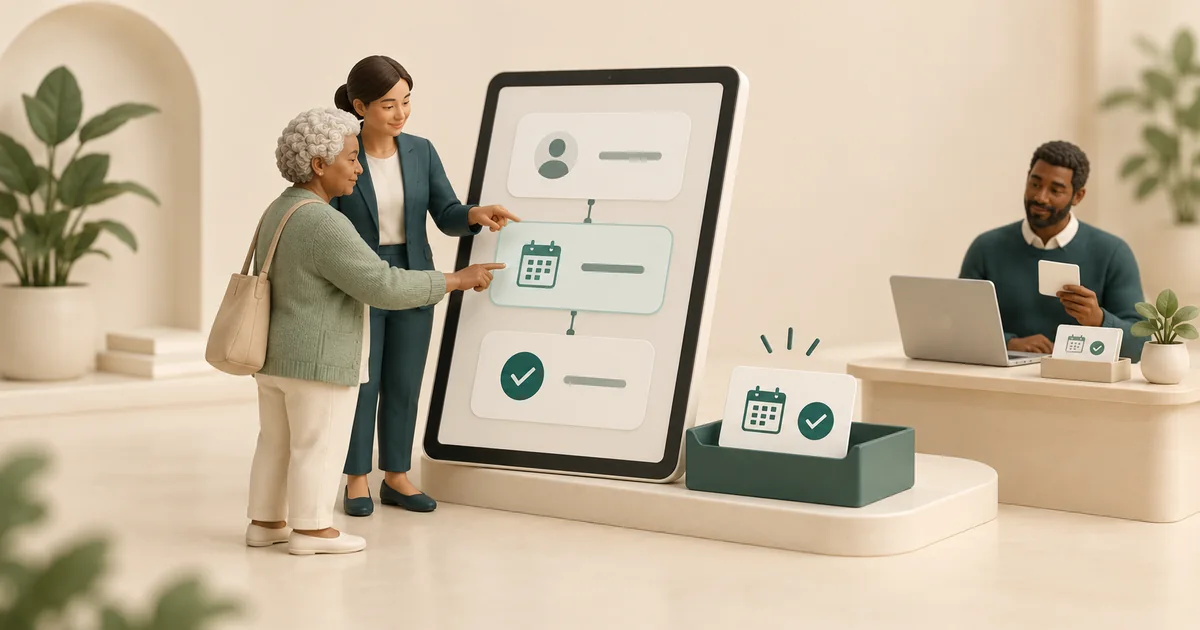
Schedule appointments directly into the EHR. Match patients with appropriate providers and available time slots. Provide self-scheduling links, send reminder sequences, and handle rescheduling automatically.
- 6
Closed-Loop Documentation and Reporting
Generate pre-visit notes ensuring providers address the right gaps during the appointment. After the visit, document closure in the EHR and sync results back. Produce reports ready for UDS submissions, HEDIS score updates, CMS Stars calculations, and payer quality program reporting.
Measures That Matter: HEDIS, UDS, and Stars
Care gap closure directly impacts three major quality measurement frameworks. Understanding which measures your organization reports determines which gaps to prioritize.
HEDIS
Healthcare Effectiveness Data and Information Set. Used by managed care organizations to evaluate plan performance. Key measures: breast cancer screening, cervical cancer screening, colorectal cancer screening, diabetes management (A1C, eye exams), blood pressure control, childhood immunizations.
UDS
Uniform Data System. Required annual reporting for FQHCs to HRSA. Key measures: cervical cancer screening, depression screening, HIV screening, prenatal/postpartum care, childhood immunization, colorectal cancer screening, diabetes management, hypertension control.
CMS Stars
Medicare Advantage star ratings system. Determines plan quality bonuses and member enrollment. Key measures: breast cancer screening, colorectal cancer screening, diabetes care, blood pressure control, medication adherence, flu vaccination.
How FQHCs Are Using Automation for Care Gap Closure
Federally Qualified Health Centers face unique challenges that make care gap closure both critical and difficult: UDS reporting requirements tied to federal funding, Medicaid-heavy populations with complex social determinants, limited staff operating across multiple sites, and contracts with multiple MCOs each sending gap files in different formats.
Automating MCO gap file ingestion eliminates the manual reconciliation across 3-5+ payer contracts
Multi-language outreach (English, Spanish) reaches populations that phone-only workflows miss
Risk stratification ensures high-impact UDS measures are prioritized before reporting deadlines
Self-scheduling links reduce no-show rates by letting patients choose convenient appointment times
Closed-loop documentation feeds directly into UDS reporting without manual chart abstraction
Between-visit outreach complements point-of-care alerts for patients who are not coming in on their own
Learn more about how Linear Health serves FQHCs: FQHC Solutions
Evaluation Criteria for Care Gap Closure Solutions
When evaluating care gap closure solutions, these criteria separate platforms that identify gaps from platforms that close them:
End-to-End vs. Identification Only
Does the platform handle the full workflow from ingestion through documentation, or does it stop at dashboards and alerts? Identification without action creates more work.
EHR Integration Depth
Is the integration certified and bi-directional (reads and writes to the EHR), or does it require manual data entry, screen-scraping, or RPA workarounds?
Outreach Capabilities
Does it support multi-channel outreach (SMS, voice, email)? Multiple languages? Consent management and TCPA compliance? Self-scheduling links?
Quality Measure Reporting
Does it produce reports ready for UDS, HEDIS, and Stars submissions, or does reporting still require manual data extraction?
Implementation Timeline
Can you go live in 4-6 weeks, or is the implementation 3-6 months? Faster time-to-value means earlier quality measure improvement.
Pricing Model
Is pricing tied to outcomes and value delivered, or is it per-seat licensing regardless of results? Outcome-aligned pricing reduces financial risk.
Implementation Timeline
Purpose-built care gap closure platforms typically go live in 4 weeks. Enterprise platforms may require 3-6 months. Here is what a typical 4-week implementation looks like:
- Week 1
Data Integration
Connect to EHR via certified APIs. Set up MCO gap file ingestion pipelines. Configure payer-specific file format parsing.
- Week 2
Workflow Configuration
Configure outreach templates and messaging. Set scheduling rules and provider matching. Map quality measures to gap types. Set up consent management.
- Week 3
Testing and Validation
Run pilot cohort through the full workflow. Verify gap validation accuracy. Test outreach delivery and scheduling. Review documentation output.
- Week 4
Go-Live and Training
Launch with full patient population. Train staff on monitoring and exception handling. Begin 30-day hypercare period with daily performance reviews.
Frequently Asked Questions
What is care gap closure?
Care gap closure is the process of identifying patients who are overdue for preventive services or chronic care management, reaching out to those patients, scheduling them for the needed service, and documenting that the service was completed. It differs from care gap identification, which only finds the gaps without acting on them.
What is the difference between care gap closure and care gap identification?
Care gap identification finds which patients have open gaps (overdue mammograms, missed A1C tests, etc.) and surfaces them on dashboards or reports. Care gap closure goes further: it includes patient outreach, appointment scheduling, pre-visit preparation, and post-visit documentation to actually close the gap. Most analytics platforms stop at identification; automation platforms handle the full closure workflow.
How do FQHCs automate care gap closure?
FQHCs automate care gap closure by ingesting MCO gap files from their managed care organization contracts, cross-referencing against EHR data to validate true gaps, risk-stratifying patients, conducting automated multi-channel outreach (SMS, voice, email), scheduling appointments, and generating UDS-ready documentation. This replaces manual phone calls and spreadsheet tracking.
What care gap measures matter most for FQHCs?
FQHCs must report UDS clinical quality measures annually to HRSA. Key measures include cervical cancer screening, breast cancer screening (mammography), colorectal cancer screening, diabetes management (A1C, eye exams, nephropathy), blood pressure control, depression screening, HIV screening, childhood immunizations, and prenatal/postpartum care. Performance on these measures affects federal funding and contract renewals.
How does automated outreach improve HEDIS scores?
Automated outreach contacts patients who are overdue for HEDIS measures through their preferred communication channel, at scale. Instead of a coordinator manually calling 50 patients per day, automation can reach hundreds simultaneously via SMS, voice, and email with personalized messaging. Higher contact rates lead to more scheduled appointments, which leads to more completed screenings, directly improving HEDIS scores.
What is the ROI of care gap closure automation?
ROI comes from three sources: (1) Quality measure improvement that increases VBC bonuses and shared savings payments, (2) Staff time recovered from manual outreach and scheduling, and (3) Additional visit revenue from patients completing overdue services. Organizations typically see 3:1 ROI within 90 days, with the largest impact coming from quality-linked revenue.
How long does it take to implement care gap closure automation?
Purpose-built platforms can go live in 4 weeks: Week 1 for data integration (EHR connection, MCO file ingestion), Week 2 for workflow configuration (outreach templates, scheduling rules), Week 3 for testing with a pilot cohort, and Week 4 for go-live and training. Enterprise platforms typically require 3-6 months.
Can care gap closure automation work with athenahealth?
Yes. Platforms with athenahealth Marketplace certification integrate bi-directionally via APIs, enabling real-time gap data access, appointment scheduling directly in the EHR, and closed-loop documentation without manual data entry or screen-scraping.
What should I look for when evaluating care gap closure software?
Key evaluation criteria: (1) End-to-end automation vs identification-only, (2) EHR integration depth and certification, (3) Multi-channel outreach capabilities and language support, (4) UDS/HEDIS/Stars reporting readiness, (5) Implementation timeline and support model, (6) Consent management and TCPA compliance, (7) Pricing model alignment with outcomes.
How does care gap closure affect value-based care contracts?
Value-based care contracts tie a portion of revenue to quality measure performance. Closing more care gaps improves HEDIS scores, UDS measures, and CMS Stars ratings, which directly increases shared savings payments, quality bonuses, and contract renewal likelihood. Organizations that close gaps faster capture more quality-linked revenue.
Related Resources
Blog guides in this cluster
Care Gap Closure Solution
See how Linear Health automates care gap closure for FQHCs on athenahealth.
FQHCs and Community Health Centers
How Linear Health helps FQHCs automate coordination workflows and improve UDS measures.
Operational AI in Healthcare
Guide to operational AI: what it automates, where it works, and how to implement it.
Operational AI Production Results
Why operational AI is finally working in healthcare and clinical AI is not.
See Care Gap Closure Automation in Action
Linear Health automates end-to-end care gap closure for FQHCs and primary care groups on athenahealth. Book a demo to see the 6-step workflow with your data.
Book a DemoStay updated
Get the latest on AI healthcare coordination.