

Quality & HEDIS leaders
Closed gaps move the measures that decide your star ratings and your contracts. For FQHCs, the same closed-loop documentation lands ready for UDS submissions and payer quality programs.
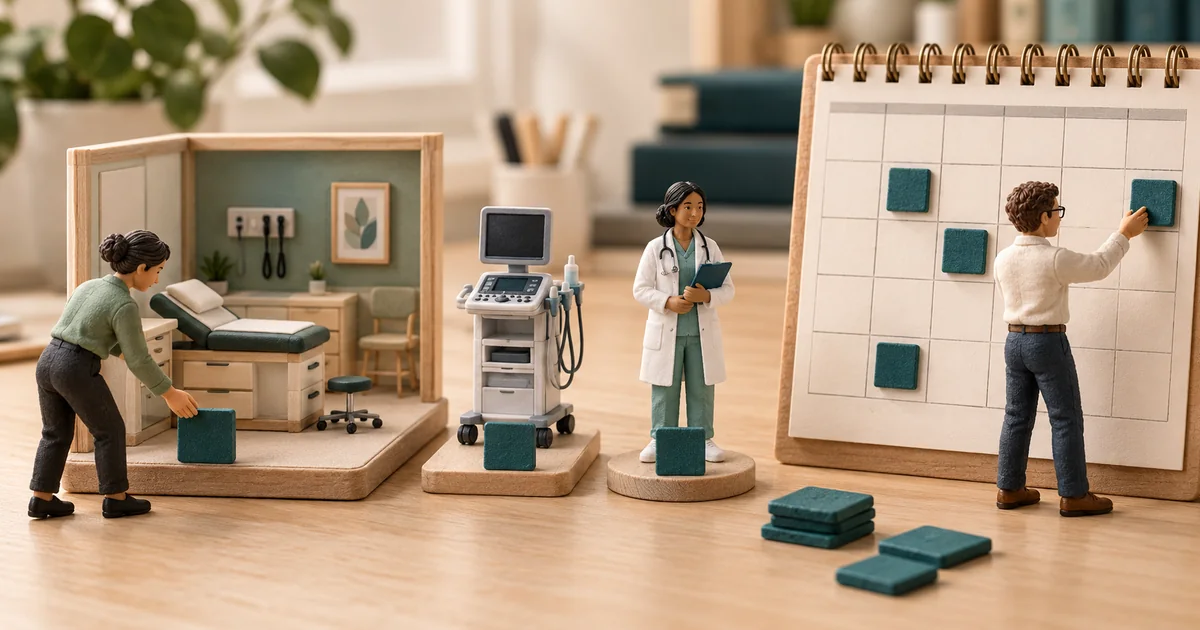
Payers hand you lists of members overdue for care, thousands of them, and closing each one means a call, a booking, and a note in the chart. Linear closes care gaps at scale. It works the payer file, reaches the patients who actually need outreach, books the visit, and writes it back to your EHR. Not a longer list. Closed gaps.
Every payer sends the same thing: a list of members overdue for care, an A1C, a mammogram, a wellness visit, running to thousands of names. No team can call every person on that list, so most of it sits untouched and the gaps stay open.
EHRs and payer portals are good at telling you a gap exists. None of them do the work of closing it: the outreach, the booking, the documentation. Until the visit happens and the code is captured, nothing moves, the claim does not drop, and the quality scores that decide your contracts stay stuck. A flagged gap is not a closed gap.
Linear runs the whole close on top of the EHR you already use. Here is the sequence, step by step.
Linear takes the payer gap list and normalizes it, matching each member to your EHR record.
It checks the last 36 months of history and skips anyone whose gap is already handled or who already has an upcoming visit, so no one gets a redundant call.
A voice agent, with SMS and email, actually reaches the person, confirms who they are, and explains the care they are due.
It schedules a real appointment directly in your EHR, and can reschedule on request.
Status, call transcript, sentiment, and a summary land in the chart, so your team sees the gap and its outcome without leaving the EHR.
Close the gap. Do not just flag it.
Every proposal shows your return against your own numbers. We build to 3x or better.
Built against your own numbers.
Your team stays in the loop on the other 20%.
Community health organization in the Chicago area, more than 100 providers across more than 20 locations, on athenahealth. Referral coordination, care gap closure and voice AI running across the network.
Read the case studyClosed gaps move the measures that decide your star ratings and your contracts. For FQHCs, the same closed-loop documentation lands ready for UDS submissions and payer quality programs.
An open gap is captured revenue left on the table; closing it at scale is margin. The visit happens, the code lands, and the bill finally drops.
Care gap closure is one workflow of many. The same engine handles the referrals coming in and going out, the prior authorizations, and the scheduling and reminders that get patients through the door, all on your existing EHR.
Reach patients by SMS, email, and voice, book directly in the EHR, send reminders, and recover no-shows.
Learn more02 / 04Capture inbound referrals, reach patients fast, and book the consult before they fall through the cracks.
Learn more03 / 04Close the loop on the referrals you send: right-specialist match, eligibility verified before booking, and the consult note back in your chart.
Learn more04 / 04Submit prior auths 10x faster, achieve 98% first-pass approval, and reduce delays from 7 days to 2 days.
Learn moreBring a real payer file. In a working demo we will show the close on your EHR, your payers, and your patients, not a generic slideshow.


Get the latest on AI healthcare coordination.