In southern Delaware, prenatal outreach starts where families live
A Delaware housing authority property and a community resource center were among the first stops for a maternal health team. The two visits connected 21 women to care.

In this article
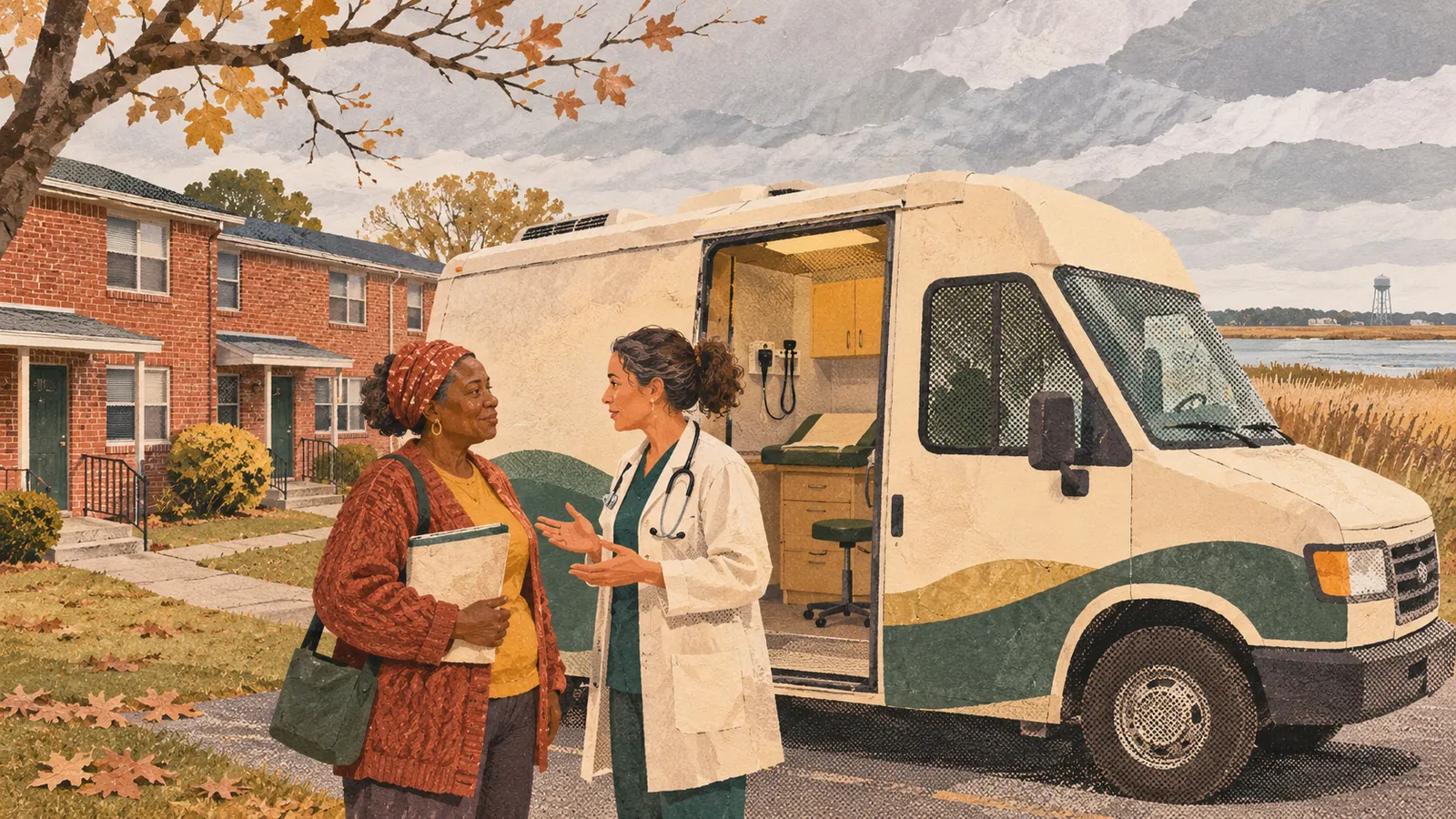
At Hickory Tree, a Delaware State Housing Authority property in Selbyville, the maternal health team came to the residents. Its other early stop was a community resource center in Rehoboth. Between those two visits, the housing authority reported in May, La Red Health Center’s outreach team connected 21 women to care.
On November 19, National Rural Health Day, the federal Health Resources and Services Administration highlighted a local project it funds to expand prenatal and preventive maternal care across rural Sussex County. Transportation is one reason the local partners took the first encounter out of the clinic. Staff at the Rehoboth center said many clients who needed prenatal or postpartum care had no practical way to reach an appointment.
What the housing and clinical partners each bring
La Red’s Maternal Outreach and Mobile Services program pairs doulas and community health outreach workers with the health center’s mobile unit. It reaches women seeking family planning as well as those who need care during or after pregnancy. The housing authority can offer a place where residents already live. The resource center can introduce the team to people who already turn to it for help.
Beebe Healthcare and TidalHealth, two hospital systems in Sussex County, also participate. Both already coordinate care with La Red. The program brings those clinical relationships to an outreach effort whose first encounter may take place outside an apartment building.
What the early count tells us
The figure of 21 covers the two inaugural visits. The housing authority described the women as connected to care and did not give a breakdown of services received or say how many later attended a prenatal or postpartum appointment. The federal November announcement also gave no updated local count.
For a family with no ride to the health center, meeting the team close to home removes a trip from that first conversation. The question for follow-up is whether the next service can also be delivered nearby or whether the family still needs a way to get there.