More San Francisco patients completed colonoscopy after clinics began tracking abnormal stool tests
Twelve safety-net clinics tracked who still needed a referral or a procedure after an abnormal stool test. Researchers also tested whether extra patient outreach helped more people get to colonoscopy.


In this article
At 12 primary care clinics in the San Francisco Health Network, 60.1% of patients with an abnormal stool test completed a colonoscopy within 180 days after their clinics introduced a new follow-up process. Before the change, 44.1% did. The comparison, reported by Urmimala Sarkar and colleagues at the University of California, San Francisco, on November 12, is preliminary. Their preprint has yet to undergo peer review, and the analysis cannot establish how much of the change the new process caused.
How clinics found patients still waiting for a referral
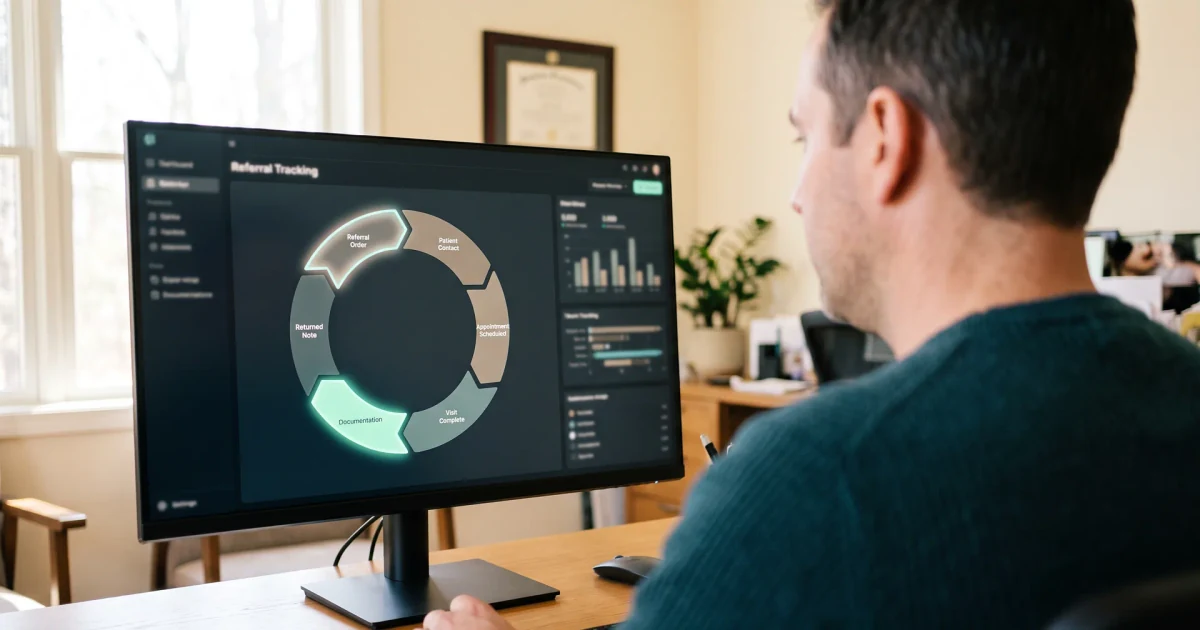
A fecal immunochemical test (FIT) checks a stool sample for blood. An abnormal result leaves the primary care team with a second task, getting the patient to a diagnostic colonoscopy. The clinics generally sent referrals to the same gastroenterology practice and shared an electronic health record. Even with that common record, a clinic needed a way to see whose result had come back without a referral and whose referral had yet to become an appointment.
Staff learned to run reports showing those gaps, document conversations consistently and explain the next step to patients. The study team also gave clinics feedback on their results. Among 2,303 patients with an abnormal FIT, 69.8% received a gastroenterology referral within 42 days before the change, compared with 84.2% afterward. Clinics adopted the process at different times. The authors plan to account for differences among clinics, patients and calendar periods in their full analysis.
Did extra outreach increase colonoscopy completion?
The team separately assigned 1,415 patients at random to usual care or additional help. That help included outreach when a referral or booking was missing and multilingual texts letting patients confirm, cancel or reschedule. The study protocol identifies Audacious Software’s HealthySMS as the messaging platform.
Within 180 days, 58.4% of the usual-care group and 57.7% of the additional-outreach group had undergone colonoscopy. The researchers found no clear difference. For a clinic reviewing its own follow-up, the San Francisco study offers three distinct questions to ask of each abnormal result. Did the referral reach gastroenterology? Is there a date on the calendar? Did the procedure take place?